

Budgeting on irregular income is easier than you think if you stop planning around money you haven’t received.
Too many freelancers and gig workers build a month on promises: an invoice, a commission, a client who says “soon.”
That usually ends with a credit card or an empty savings account.
This post shows a simple, step-by-step framework to find your true monthly baseline, assign every dollar, and build a buffer so your bills get paid even in lean months.
Core Framework for Managing a Budget With Irregular Income

Forecasting is where freelancers, contractors, and gig workers shoot themselves in the foot. You plan your month around an invoice that hasn’t hit your account, a commission check that’s still “processing,” or a client payment that might show up next week. Maybe. When that money comes in late, gets cut, or vanishes completely, you’re stuck covering the gap with a credit card or raiding your savings. That’s how irregular income becomes a cash crisis.
The fix? Budget only what’s already in your account. Don’t assign dollars you haven’t received yet.
Your baseline budget is the number that holds everything together. List every expense you face, then sort them: predictable monthly costs (rent, phone, car payment), unpredictable monthly costs (electric, groceries, gas), predictable non-monthly costs (Amazon Prime at $120 a year becomes $10 a month, car insurance at $540 every six months becomes $90 a month), and unpredictable non-monthly costs (car repairs, medical bills). Add it all up. That’s your baseline monthly need. Beth, a freelancer, calculated hers at $3,384 per month. She listed rent at $1,200, groceries at $350, gas at $100, student loans at $350, auto loan at $200, and kept going until she hit the total.
Six steps to build stability:
- Count the cash you’ve got right now in checking, savings, anywhere liquid.
- List every expense coming this month and over the next twelve months, sorted into those four categories.
- Assign every dollar in your account to a specific category until your budget balances to zero (you can leave a small cushion of $100 to $300 in checking).
- During high-income months, set aside surplus cash to fund future months instead of spending it right away.
- Build a buffer equal to at least one month’s baseline expenses so lean months don’t force you onto a credit card.
- Adjust category assignments every time you get paid, whether that’s daily, weekly, or once a month.
When you know your baseline monthly cost, you can fund it completely during a good month and carry the rest forward. Beth got two $7,000 payments in one month, so she funded two months of living costs at $3,384 each (totaling $6,768) and kept the small surplus for the next payday. That’s how a defined baseline turns unpredictable income into stable monthly living.
Income Analysis and Long-Term Stabilization Techniques

Smoothing your income over a 12-month rolling average shows you patterns you’ll miss if you only look at this month or last quarter. Add up your total net deposits over the past year, divide by twelve. That average becomes your income anchor. If your rolling average is $5,100 per month but some months bring in less than half that while others hit $9,000, you use the anchor to plan steady monthly spending and carry surplus forward. When March earns $8,700, assign $5,000 to March categories and move the remaining $3,700 to April, which then only needs $1,300 more to finish the month.
Looking at income patterns over time also tells you whether your low months are random or predictable. A seasonal landscaper knows winter is lean. A wedding photographer knows January is quiet. A commission salesperson might see slower summers. Once you spot the pattern, you can build a coverage plan during high months instead of scrambling during the dip. The longer your income history, the more accurate your anchor gets and the less surprise you face each month.
| Income Source | Stability Level |
|---|---|
| Freelance project fees | Low (unpredictable timing and amount) |
| Seasonal work (construction, retail, landscaping) | Medium (predictable lean months) |
| Commission sales | Medium (fluctuates but averages over time) |
| Tips (server, delivery, rideshare) | Low (daily and weekly variance) |
Practical Expense Structuring for Freelancers and Variable Earners
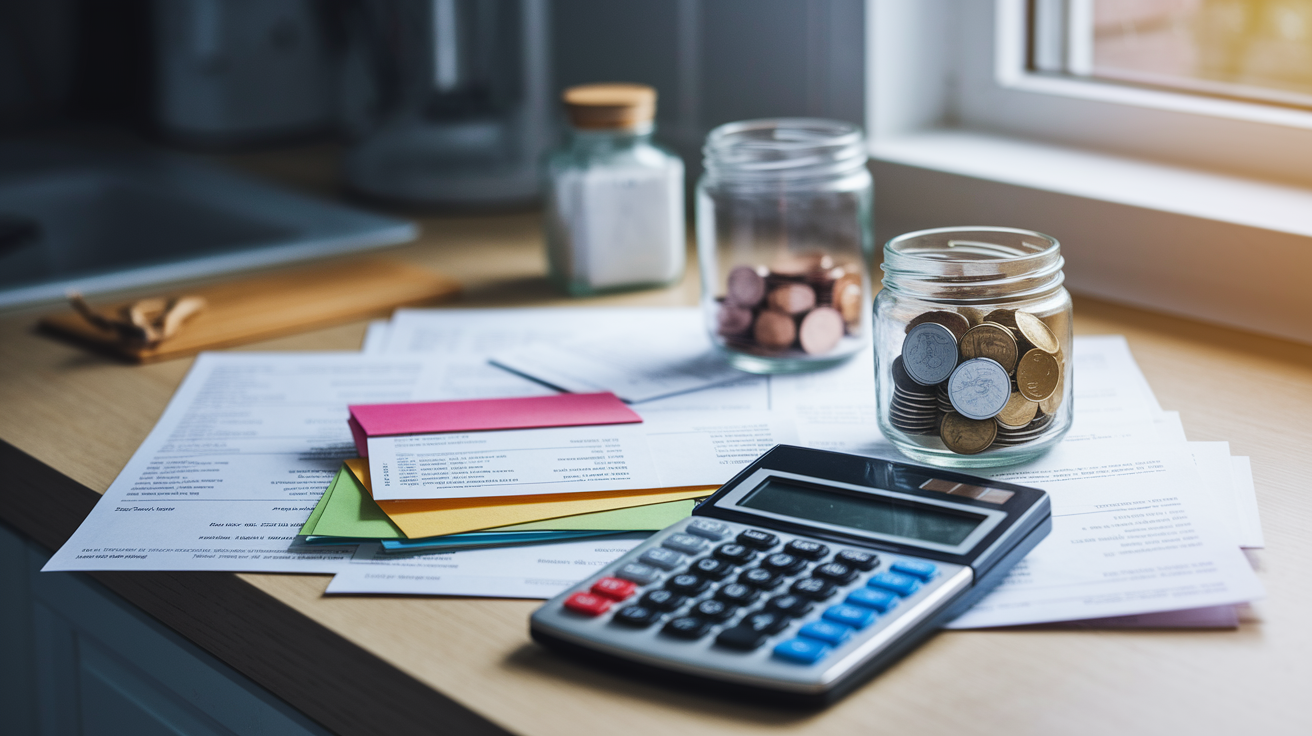
Fixed monthly expenses show up every month at the same amount. Rent, mortgage, car payment, phone bill, internet, childcare. Variable monthly expenses happen every month but the total changes. Electric, water, groceries, gas, household supplies. Separating the two helps you know which costs stay locked and which ones you can trim during a lean month. Your fixed monthly total is the floor you’ve got to cover no matter what.
Reconstructing prior months from bank statements and credit card records fills in the gaps when you haven’t been tracking daily. Pull the last three months of transactions, categorize each charge, tally the totals by category. You’ll see patterns. Groceries might average $350, electric might swing between $70 and $110, gas might range from $80 to $140. Use the high end of each range as your initial budget line until you gather more data. Tracking spending for at least a couple weeks in real time sharpens those estimates and catches small recurring charges you forget about.
Sinking funds break large, irregular costs into small monthly set-asides so the bill doesn’t wreck your budget when it arrives. If you owe $750 in three months, save $250 each month. Car insurance costs $540 every six months? Set aside $90 per month. Amazon Prime costs $120 per year? Treat it as $10 per month. Divide the total cost by the number of months until it’s due, then assign that amount every payday.
How to track expenses weekly:
- Write down or log every purchase the day you make it, even small cash buys.
- At the end of each week, review your spending log and compare it to your budget categories.
- Adjust remaining category balances so you know how much is left for the rest of the month.
- If a category runs low, decide whether to move money from a lower-priority line or cut spending for the rest of the week.
- Use the weekly check-in to catch overspending early, before the month ends and the money’s gone.
Buffering and Smoothing Income When Earnings Fluctuate

The “months ahead” system is the most powerful way to smooth irregular income. Every time a large payment arrives, assign enough to cover the current month completely, then use the rest to fund next month or the month after. Beth got two $7,000 client payments in one month and immediately allocated $3,384 for that month and another $3,384 for the following month, leaving a small buffer. She started the next month already funded. That meant she could work without stressing over whether invoices would clear in time to pay rent.
Predictable lean months need planning during the fat months. Seth, a teacher, knew his summer would be three months with no salary. His summer baseline need was $1,876 per month, so three months totaled $5,628. He had $4,134 saved, which left a $1,500 shortfall. That broke down to $500 per month. He picked up grocery delivery shifts for $600 per month and sold fishing lures online for $200 per month, covering the gap and adding a small cushion. Because his lean months were predictable, he knew the exact target and the exact timeline.
A multi-month runway is the difference between reacting and planning. If you can fund three months ahead, a surprise dry spell doesn’t touch your living expenses. You keep paying rent, utilities, groceries, and debt on time while you chase new work or wait for slow clients to pay. The runway also lets you be selective about projects instead of taking low-paying work out of desperation. Build the buffer during your best-earning months, even if it means skipping discretionary spending for a season.
| Month Type | Actions |
|---|---|
| High-income month | Fund current month fully, assign surplus to next month or buffer fund, resist lifestyle creep |
| Low-income month | Use buffer or prior-month funding to cover essentials, cut nonessentials, track closely |
| Predictable lean season | Calculate total needed, save during fat months or add temporary income to fill gap |
| One-off windfall | Allocate to buffer first, then debt or goals; avoid treating it as extra spending money |
| Unexpected bill month | Pull from sinking fund or reassign lower-priority dollars; adjust next month’s plan |
| Average month | Follow baseline budget, track spending, refine category estimates based on actual totals |
Budgeting Strategies Specifically for Gig Workers, Contractors, and Seasonal Earners

The holding-account method centralizes all income in one account and pays you a fixed monthly amount into your spending account. Every deposit goes into the holding account. Client payment, tax refund, side gig, bonus, all of it. Then, on the first of each month, transfer your baseline monthly need into checking and spend only from that account. During high-earning months the holding account balance grows. During lean months it shrinks. The balance smooths your spending even when deposits swing wildly. A student version of this splits a lump-sum loan or summer savings into biweekly “paychecks” so the money lasts the full semester instead of disappearing in the first month.
The two-budgets method creates one plan for good months and a separate leaner plan for low months. Your good-month budget includes everything you need plus some extras. Dining out, subscriptions, goal funding. Your lean-month budget covers only the essentials: rent, utilities, groceries, minimum debt payments, critical insurance. The risk with this approach is forming spending habits during good months that you can’t sustain during lean months. When income drops, you either cut hard or reach for a credit card to maintain the lifestyle. If you use two budgets, treat the lean-month version as the real baseline and the good-month additions as temporary bonuses, not permanent costs.
Comparison of the primary strategies:
- Average-income budgeting: Calculate your 12-month rolling average income, divide by twelve, build a monthly budget on that amount. Works best when your highs and lows aren’t extreme.
- Holding-account method: All income into one account, fixed monthly transfer to spending. Best for unpredictable timing and amounts. Requires discipline not to dip into the holding account.
- Two-budgets method: One budget for high months, one for lean months. Riskiest option because it’s easy to overspend during good months and rely on credit during bad ones.
- Rolling baseline (variation): Update your baseline every month based on a 12-month trailing average. Adapts to income changes over time without sudden swings.
- Percentage allocation: Assign percentages to categories (50 percent needs, 30 percent goals, 20 percent extras) and apply them to whatever you earn that month. Simplest method but offers less control during very low months.
Handling Irregular Bills, Non-Monthly Expenses, and Annual Costs on Variable Pay
Annual and semi-annual bills wreck budgets when you forget about them until the due date shows up. Amazon Prime at $120 per year becomes $10 per month. Car insurance at $540 every six months becomes $90 per month. Renter’s insurance at $240 per year becomes $20 per month. Treat every non-monthly expense as a monthly line item by dividing the total cost by the number of months until it’s due. If a $750 bill is due in three months, set aside $250 this month, $250 next month, $250 the month after. When the bill arrives, the money’s already waiting.
Unexpected costs will happen. Sinking funds absorb them without breaking your plan. If you’ve saved $700 for car repairs and the mechanic charges $744.29, you’re only short $44.29. Move that amount from a lower-priority category, like dining out or clothing, and the repair is covered. Changing the plan is part of the system, not a failure. The goal is conscious trade-offs, not a perfect forecast.
How to convert irregular bills into monthly allocations:
- List every non-monthly expense you know is coming (insurance, subscriptions, membership fees, property taxes, car registration, annual software, holiday gifts, vacations).
- Write the total cost and the due date or renewal month next to each item.
- Count the number of months between now and the due date, divide the total cost by that number to get your monthly set-aside amount.
- Add a monthly line in your budget for each item and assign the calculated amount every payday until the bill arrives.
Taxes, Business Finances, and Cash Flow Rules for Self-Employed Workers

Self-employed income doesn’t have taxes withheld, so you’ve got to set aside estimated tax payments yourself. A separate savings account for taxes keeps that money out of your spending budget and prevents the shock of owing thousands in April. A common rule is to save 25 to 30 percent of every payment you receive, though your actual rate depends on your income level, deductions, and state taxes. Paying estimated taxes quarterly (April, June, September, January) avoids penalties and spreads the cost across the year instead of one giant annual bill.
Separating business income and expenses from personal money is a cash-flow and tax requirement. Open a dedicated business checking account, route all client payments into it, pay all business costs from it. Transfer your owner pay (your personal income) from the business account to your personal account on a set schedule, and budget your household spending from the personal account only. This separation makes tax filing simpler, protects you legally, and stops you from accidentally spending money that belongs to a vendor, tax agency, or future business cost. The holding-account method works well here. Business account holds all income, personal account receives a fixed monthly transfer.
Three tax-saving guidelines for irregular earners:
- Set aside 25 to 30 percent of every deposit into a dedicated tax savings account immediately, before you assign any other dollars.
- Review your estimated tax liability quarterly using prior-year returns or a tax calculator, and adjust your set-aside percentage if your income or deductions change.
- Keep business receipts, mileage logs, and expense records organized monthly so filing is fast and you don’t miss deductions that lower your tax bill.
Tools, Templates, and Apps for Budgeting With Irregular Income

Budgeting apps built for zero-based budgeting make it easier to assign every dollar a job and adjust categories as income arrives. YNAB (You Need A Budget) includes a variable-income template that walks you through funding future months and prioritizing expenses. EveryDollar offers a paycheck planning feature that organizes your expenses by due date so you can allocate each payment to the bills that need to be covered before the next deposit. Both apps sync with your bank accounts and let you track spending in real time, which keeps your remaining balances accurate without manual entry.
Spreadsheet templates give you full control and cost nothing. A simple Google Sheets or Excel template with columns for category, budgeted amount, spent amount, and remaining balance is enough to manage irregular income. Add a separate tab for sinking funds (annual bills broken into monthly savings) and another tab for income tracking (date, source, amount). Templates let you customize categories, experiment with different smoothing methods, and archive past months to review spending patterns over time. Free downloadable budget spreadsheets are available from many personal-finance sites and can be adapted to your exact situation.
| Tool Type | Example | Best For |
|---|---|---|
| Zero-based budgeting app | YNAB, EveryDollar | Real-time tracking, automated syncing, guided workflows for irregular income |
| Spreadsheet template | Google Sheets, Excel budget template | Full customization, no monthly cost, archiving past months for pattern analysis |
| Expense tracker | Mint, PocketGuard | Automatic categorization, spending alerts, quick snapshot of cash flow |
| Income calculator | Rolling-average calculator, quarterly tax estimator | Smoothing income, estimating tax liability, planning lean months |
| Debt and goal tracker | Debt snowball calculator, savings-goal tracker | Visualizing progress, allocating surplus income to specific targets |
Final Words
Take the core framework: budget only the money you have. Build a conservative baseline from predictable and unpredictable costs, and give every dollar a job.
Use rolling averages and a months-ahead buffer to smooth earnings. Track spending, create sinking funds for annual bills, and set aside taxes in a separate account.
Follow these steps and you’ll be able to budget on irregular income without guessing each month. It takes practice, but you can make your money steadier and less stressful.
FAQ
Q: What is the 3 3 3 budget rule? What is the 3 6 9 rule in finance?
A: The 3 3 3 budget rule and the 3 6 9 rule are quick money shortcuts: 3-3-3 usually means keeping short-term buffers and quarterly check-ins, while 3-6-9 guides staging or averaging income across months to smooth pay.
Q: What is the 70/20/10 rule money?
A: The 70/20/10 rule splits income: 70% for needs, 20% to savings or debt paydown, and 10% for wants. Use it as a simple baseline and tweak for your expenses.
Q: How to deal with inconsistent income?
A: To deal with inconsistent income, budget only money you have, build a buffer, set a conservative baseline from predictable expenses, use sinking funds, smooth surplus months, and adjust each payday.