

What if the debt fix you picked actually raised your monthly bills?
Too many people consolidate without checking fees, rates, or the fine print, and they end up paying more.
This post shows which consolidation choices really lower your monthly payment: balance transfer cards, personal loans, nonprofit debt management plans, and home equity options, plus the tradeoffs for each.
You’ll get clear steps to compare total cost and pick the option that actually shrinks your bill.
If you’re juggling multiple payments, this guide makes the next step simple.
Core Methods for Consolidating Debt

A balance transfer credit card lets you move existing credit card balances onto a new card with a 0% intro APR. You’ll get somewhere between 12 and 21 months without interest piling up, which gives you room to chip away at what you actually owe. There’s usually a transfer fee, around 3% to 5% of whatever you move over. And you need pretty solid credit to get approved for the good offers. This works if you can realistically knock out the full balance before that promo window closes and the regular rate jumps back in.
A debt consolidation loan (sometimes just called a personal loan) is one lump sum you use to wipe out multiple debts at once. Instead of tracking four or five credit card bills with different rates and due dates, you make a single fixed payment every month. The rate is locked in, so your payment won’t change, and terms usually run anywhere from 1 to 7 years. Personal loans make sense if you’ve got decent credit, you can lock in a lower rate than you’re paying now, and you want the structure of knowing exactly when you’ll be done.
A debt management plan gets set up through a nonprofit credit counseling agency. They negotiate with your creditors, consolidate your unsecured debts into one monthly payment that you send to the agency, and they handle distribution. Counselors often get your rates cut (sometimes in half) and can waive late fees. You’ll need to close or stop using the credit cards enrolled in the plan, and repayment stretches over 3 to 5 years. This is a good fit if your credit isn’t strong and you need someone in your corner managing the details.
A home equity loan or HELOC uses your house as collateral. Because the loan is backed by property, lenders offer lower rates than you’d get with an unsecured option. You take the funds, pay off your high interest debts, then repay the home equity product over time. The trade off is serious. Miss payments and you could lose your house. This route works for homeowners with real equity who are confident they can repay and comfortable with the risk.
Quick comparison:
- Balance transfer card: 0% intro window, transfer fee applies, good credit required, best when you can pay it off fast.
- Personal loan: Fixed rate and payment, no collateral needed, moderate credit works, suits mid length payoff plans.
- Debt management plan: Nonprofit negotiates lower rates, no credit score requirement, 3 to 5 year commitment, card use gets restricted.
- Home equity loan/HELOC: Secured by your home, lowest rates available, requires equity, foreclosure risk if you default.
Evaluating Pros and Cons of Each Consolidation Option

Every method has clear upsides and real downsides. Knowing both helps you pick what fits your situation and how much risk you’re willing to take on.
Balance transfer cards can save you serious money during that 0% promo period. Transfer $5,000 and pay it off in 18 months at zero interest, and you dodge hundreds (maybe thousands) in finance charges. But there’s a transfer fee eating into your savings upfront, and the clock starts ticking the moment you move the balance. Miss your payoff deadline and whatever’s left gets hit with the card’s standard APR, often 18% to 25% or higher. You need discipline here. If you don’t finish on time, this can backfire.
Personal loans keep things simple. One payment, one due date, and a clear finish line. Because the rate is fixed, you know what you’ll pay each month and what the total cost will be by the end. The catch is that if your credit score is lower, you might not qualify for a rate better than what you’re already paying. Some lenders tack on origination fees that cut into your savings. And the biggest trap is using those credit cards again after you’ve paid them off, which leaves you juggling both the loan and new card debt.
Debt management plans give you structure and professional help. A counselor works with your creditors to slash interest rates and eliminate fees. You get support building a budget and staying on track. Downside? Creditors will likely close your enrolled accounts, and you can’t open new credit while you’re in the program. Some agencies charge setup and monthly fees. Plans take time, usually 3 to 5 years, which means you need to stick with it.
Home equity products come with the lowest interest rates because your home backs the debt. Payments tend to be smaller, and you can stretch terms longer than unsecured loans. But you’re putting your house on the line. If your income drops or you lose your job and can’t make payments, you’re facing foreclosure. You’ll also pay appraisal costs and closing fees, so factor those into whether the savings actually make sense.
| Method | Main Benefit | Main Drawback |
|---|---|---|
| Balance transfer card | 0% APR period kills interest | Transfer fee plus high rate after promo ends |
| Personal loan | Fixed payment with clear payoff date | Higher rates if your credit’s lower, risk of running up cards again |
| Debt management plan | Negotiated rate cuts and counselor support | Card closures and multi year commitment |
| Home equity loan/HELOC | Lowest interest rates you’ll find | Your home’s at risk, closing costs apply |
Eligibility Requirements and Qualification Factors

Each consolidation method sets different bars for who gets approved. Your credit score, income, and how much debt you’re already carrying determines which options are even on the table.
Balance transfer cards typically want good to excellent credit. That means a FICO score around 670 or higher. The best 0% offers and highest credit limits go to people with scores above 700. Issuers also check your income and debt to income ratio to make sure you can handle the balances you’re moving over. If your credit is fair or poor, you might not qualify at all, or you’ll get a limit too low to cover everything you owe.
Personal loan approval depends on your credit history, income stability, and debt to income ratio (the chunk of your monthly gross income that goes toward debt payments). Lenders want that ratio below 40%, though some will go higher. Better credit scores unlock lower APRs. Borrowers with scores below 650 often face double digit rates or get turned down completely. Some online lenders work with fair credit borrowers, but they charge more to offset the risk. Always prequalify with a few lenders so you can compare offers without racking up hard inquiries.
Debt management plans don’t require a minimum credit score because they aren’t loans. A counselor looks at your unsecured debts, income, and expenses to build a realistic payment plan. As long as you’ve got steady income and debt that’s manageable relative to what you bring in, you can enroll. Home equity loans and HELOCs need enough equity in your home (usually at least 15% to 20% after the loan), proof of stable income, and a credit score typically above 620. Requirements vary by lender, though.
Three factors that influence approval:
- Credit score and payment history (higher scores improve odds and lower rates)
- Debt to income ratio (lenders want proof you can afford the new payment)
- Collateral or equity (secured options need property value, unsecured options lean on creditworthiness)
Step-by-Step Guide to Consolidating Debt Successfully
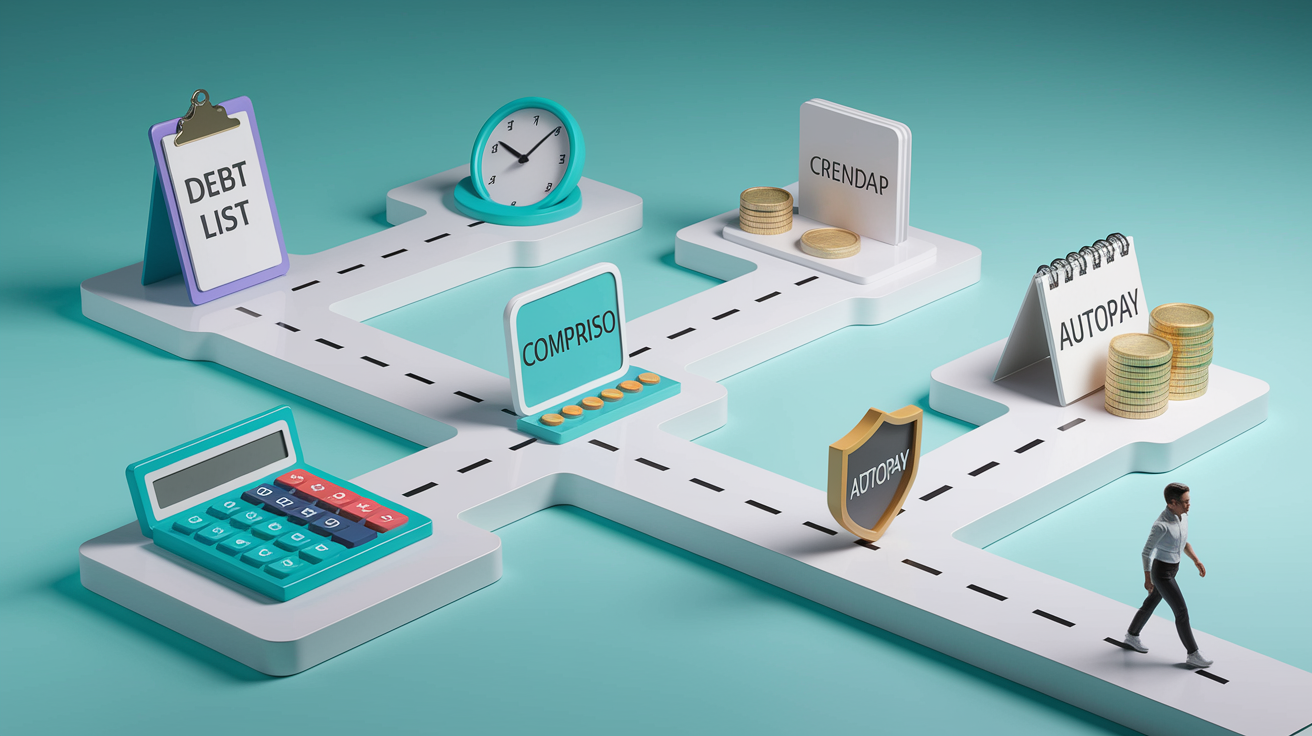
Consolidating debt is pretty straightforward when you break it into steps. Each one builds on the last, turning scattered balances into one payment you can actually manage.
1. List all your debts. Write down every balance, who you owe, the current interest rate, minimum monthly payment, and due date. Pull a free credit report if you’re not sure what accounts are open. This snapshot shows you the total you need to consolidate and helps you calculate what you’ll save.
2. Check your credit score. Your score determines which methods are available and what rates you’ll qualify for. Most credit card issuers and banks offer free score access. Knowing your score before you shop saves time and keeps expectations realistic.
3. Compare consolidation options. Use your debt total and credit score to narrow things down. If you’ve got good credit and can pay off the balance in 15 months, a balance transfer card might be your best bet. If you need more time or your credit’s fair, compare personal loan rates from banks, credit unions, and online lenders. If your credit is low or you want help negotiating, contact a nonprofit credit counselor about a debt management plan. Homeowners with equity should compare home equity loan and HELOC rates.
4. Calculate total cost for each option. Add up the interest you’ll pay over the repayment period plus any fees. Balance transfer fees, origination fees, closing costs, DMP setup fees. The option with the lowest total cost and a monthly payment you can swing is usually the right call.
5. Apply and complete the consolidation. Submit your application. Once you’re approved, use the new credit line or loan proceeds to pay off your existing balances right away. For balance transfers, start the transfers through the card issuer’s portal. For personal loans, many lenders can pay creditors directly. For DMPs, the counseling agency handles creditor payments after you enroll.
6. Set up autopay and avoid new debt. Schedule automatic payments for your consolidation account so you never miss a due date. If you consolidated credit cards, either close the accounts (if that won’t hurt your credit too much) or keep them open with a zero balance and set one small recurring bill on autopay to keep the account active. The biggest mistake is running up new balances on the cards you just paid off.
Costs, Fees, and Interest Rates to Expect

Consolidation isn’t free. Understanding what each option costs helps you calculate real savings and avoid getting blindsided.
Balance transfer cards usually charge a one time balance transfer fee of 3% to 5% of the amount you move. Transfer $8,000 and a 3% fee costs you $240 upfront. Some cards waive the fee as a promo offer, but those are rare. After the 0% intro period ends (commonly 12 to 21 months), the card’s regular APR kicks in on any remaining balance, often somewhere between 18% and 25%.
Personal loan APRs vary a lot based on your credit and which lender you use. Borrowers with excellent credit might see rates as low as 6% to 10%. Fair credit borrowers might pay 15% to 25%. Subprime borrowers can face rates above 30%. Many lenders also charge an origination fee, typically 1% to 6% of the loan amount, which gets deducted from the proceeds. A $10,000 loan with a 5% origination fee means you receive $9,500 but you’re repaying the full $10,000 plus interest.
Debt management plans often include a one time setup fee and a monthly maintenance fee. Fees vary by agency, but expect setup costs around $30 to $75 and monthly fees of $20 to $50. Nonprofit counselors are generally cheaper than for profit companies. Always ask for a clear fee schedule before enrolling. Home equity loans and HELOCs come with closing costs similar to a mortgage. Appraisal fees, title searches, and lender fees that can total 2% to 5% of the loan amount. A $20,000 HELOC might cost $400 to $1,000 in upfront fees.
Four common fees to watch for:
- Balance transfer fee (3% to 5% of transferred amount)
- Loan origination fee (1% to 6% of loan principal)
- DMP setup and monthly service fees (varies by agency)
- Home equity closing costs (appraisal, title, lender fees)
Risk Considerations and When Consolidation May Not Be Wise

Consolidation can backfire if it doesn’t fix the root spending problem or if you pick the wrong method for your situation.
The biggest risk is treating consolidation like a reset button. You pay off your credit cards with a loan or balance transfer, feel relieved, and then start using the cards again. Within a year, you’re carrying both the consolidation payment and new card balances. You’re worse off than before. Consolidation only works if you commit to living within your means and not piling up fresh debt.
Stretching your repayment term too long can also cost you. A longer loan term lowers your monthly payment, which feels easier on your budget. But you’ll pay more total interest over the life of the loan. Consolidating $15,000 at 12% APR over three years costs about $2,900 in interest. Stretch it to seven years and interest climbs to nearly $6,800. If you can’t afford a reasonable term, consolidation might not solve the problem.
Secured consolidation options like home equity loans and HELOCs put your property at risk. If you lose your job or face a financial emergency and can’t make payments, the lender can foreclose on your home. You’re using your house to pay off unsecured credit card debt, which transforms dischargeable debt into a lien on your most valuable asset. Only choose this route if your income is stable and you have an emergency fund to cover at least three months of payments. If your financial situation is already shaky, the risk is too high.
Comparing Consolidation vs. Alternatives

Consolidation isn’t the only option when you’re overwhelmed by debt. Understanding how it stacks up against other strategies helps you choose the right path.
Debt settlement involves negotiating with creditors to accept less than the full balance owed. You or a settlement company proposes a lump sum payment (often 40% to 60% of the debt) in exchange for the creditor forgiving the rest. Settlement can reduce what you owe, but it tanks your credit because accounts typically go delinquent or into collections before creditors agree to settle. Forgiven debt is also usually taxable income. Settlement is generally a last resort when you’re already far behind or facing bankruptcy.
Bankruptcy is a legal process that discharges some or all of your debts under court supervision. Chapter 7 wipes out most unsecured debt but requires passing a means test and might force you to liquidate non exempt assets. Chapter 13 reorganizes debt into a court approved repayment plan spanning three to five years. Bankruptcy offers a fresh start but wrecks your credit for years (up to 10 years on your report for Chapter 7) and carries long term consequences for loans, housing, and even employment. It’s appropriate when debt is truly unmanageable and other options have failed.
Do it yourself debt payoff skips new credit products and focuses on budgeting, cutting expenses, and attacking debt with extra payments. Popular strategies include the debt avalanche (paying extra toward the highest APR balance first) and the debt snowball (paying off the smallest balance first for quick wins). DIY methods cost nothing in fees and avoid new borrowing, but they require discipline and can take longer without the interest savings that consolidation provides. This approach works best if your debt is moderate, your income is stable, and you’re confident you can stick to a plan without external structure.
| Option | How It Works | Key Difference from Consolidation |
|---|---|---|
| Debt settlement | Negotiate with creditors to pay less than full balance | Reduces principal owed but damages credit and can trigger tax liability |
| Bankruptcy | Legal discharge or reorganization of debts through court | Offers legal fresh start but impacts credit for up to 10 years |
| DIY payoff (avalanche/snowball) | Budget aggressively and pay extra toward debts in priority order | No new borrowing or fees, relies on discipline and can take longer |
Final Words
Start by choosing a method like balance transfer cards, personal loans, debt management plans, or home equity loans. Gather your balances and interest rates so you know the true cost.
We covered pros and cons, who usually qualifies, common fees, a step-by-step process, and when consolidation can be risky.
Use these debt consolidation strategies as a toolkit. Compare total costs, check eligibility, and pick the option that lowers interest and simplifies payments. Small steps add up, and you’ll be in better control soon.
FAQ
Q: What is the best debt consolidation method?
A: The best debt consolidation method depends on your credit, debt mix, and goals. Use a 0% balance transfer for short-term interest savings, a fixed-rate personal loan for steady payments, or a DMP/home equity in specific cases.
Q: What is the 7 7 7 rule for debt collection?
A: The 7-7-7 rule for debt collection refers to a simple contact schedule: reach out about seven days after a missed payment, follow up seven days later, then make a final seven-day escalation or notice.
Q: How to pay off $30,000 in debt in 1 year?
A: To pay off $30,000 in debt in 1 year you must pay about $2,500 monthly, cut spending, boost income, and lower interest via balance transfer or personal loan while prioritizing high-rate balances.
Q: How many Americans have $10,000 in credit card debt?
A: The number of Americans with $10,000 in credit card debt varies by source; recent surveys show several million people carry $10,000+ but exact counts change year to year.