

Think foreclosure kills your credit forever?
It doesn’t have to.
If you start the day the foreclosure closes and follow a few steady steps, you can rebuild your score much faster than you think.
This guide gives a clear step-by-step plan: what to do in the first 60 days, how to fix report errors, set a tight budget, use secured cards and credit-builder loans, and protect payment history.
Follow these steps and you can move from subprime to decent credit sooner than you expect.
Immediate Credit Recovery Actions After Foreclosure

You need to start rebuilding the day your foreclosure closes. That foreclosure just knocked 100 to 200 points off your credit score. What you do in the next 30 to 60 days? That’s what decides whether you recover fast or stay stuck.
First 60 days, here’s what matters:
- Pull reports from all three bureaus. Equifax, TransUnion, Experian. See exactly how they recorded the foreclosure.
- Don’t miss anything else. Not one payment on credit cards, car loans, utilities, personal loans. Nothing.
- Save every piece of paperwork from your lender. Foreclosure date, final account status, all of it.
- Find out if you owe a deficiency balance or if the lender wrote off what was left.
- Autopay everything. Or set calendar alerts for every single bill. Your call, but pick one and stick to it.
- Write down your income, your required payments, and what’s left. Basic financial plan. No guessing.
Why these two months count so much: you already showed lenders you couldn’t handle a major obligation. Add new late payments now and you’re telling them the chaos continues. Every on-time payment from here forward starts rebuilding the data they use to score you.
Most people see their score fall from low 700s down to high 500s or low 600s after foreclosure. That’s subprime territory. Lenders limit your access, raise your rates, ask for bigger deposits. If you stop the bleeding early and start adding positive payment activity, you can shake that subprime label way before the foreclosure drops off your report seven years from now.
What you build right now decides if you recover in 18 months or spend the next five years locked out of decent credit.
Reviewing Credit Reports to Start Rebuilding Credit
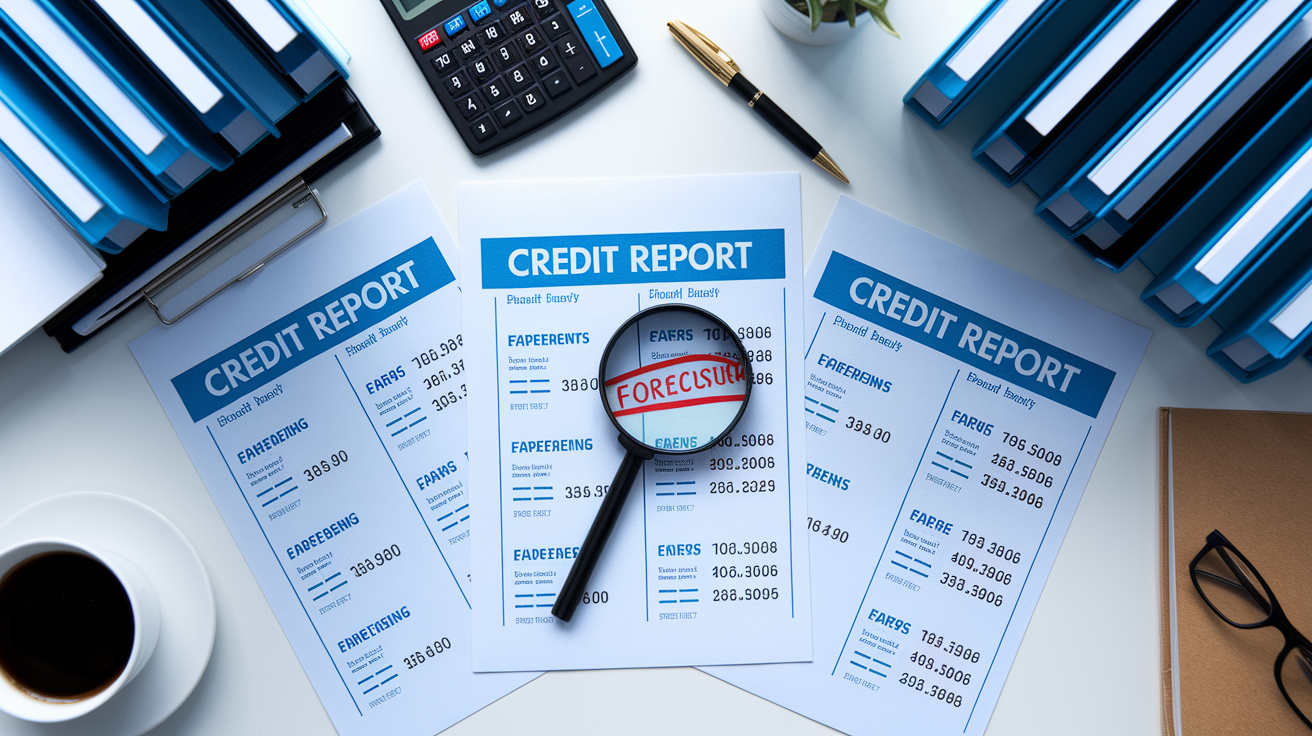
You can grab free credit reports once every 12 months from the big three bureaus. Order all three at once. Compare how each one recorded your foreclosure, the final mortgage balance, the late payments leading up to the sale. Errors on your report can add months or years to your recovery, so look closely.
Check the foreclosure entries. Confirm the date, the balance, whether the mortgage account shows as closed. Review every late payment marker for accuracy. If you spot duplicate foreclosure entries, balances that don’t match your lender’s final statement, or accounts still showing open when they should be closed, file disputes with the bureau and the lender. Bad data drags your score lower than it should be and confuses anyone reviewing your file.
Watch for these reporting mistakes:
- Foreclosure dates that make the entry look newer than it actually is
- Duplicate entries from the same lender showing up on one or more bureau reports
- Wrong balances overstating what you owed when the home sold
- Deficiency balances listed as unpaid when the lender wrote off the debt
- Mortgage accounts still marked open instead of closed after everything wrapped up
Foreclosure and the late payments tied to it stick around for seven years from the first missed payment. Disputing real entries won’t make them disappear. But fixing errors can bump your score up immediately and give you cleaner data while you rebuild.
Budgeting and Cash Flow Systems for Post‑Foreclosure Credit Rebuilding
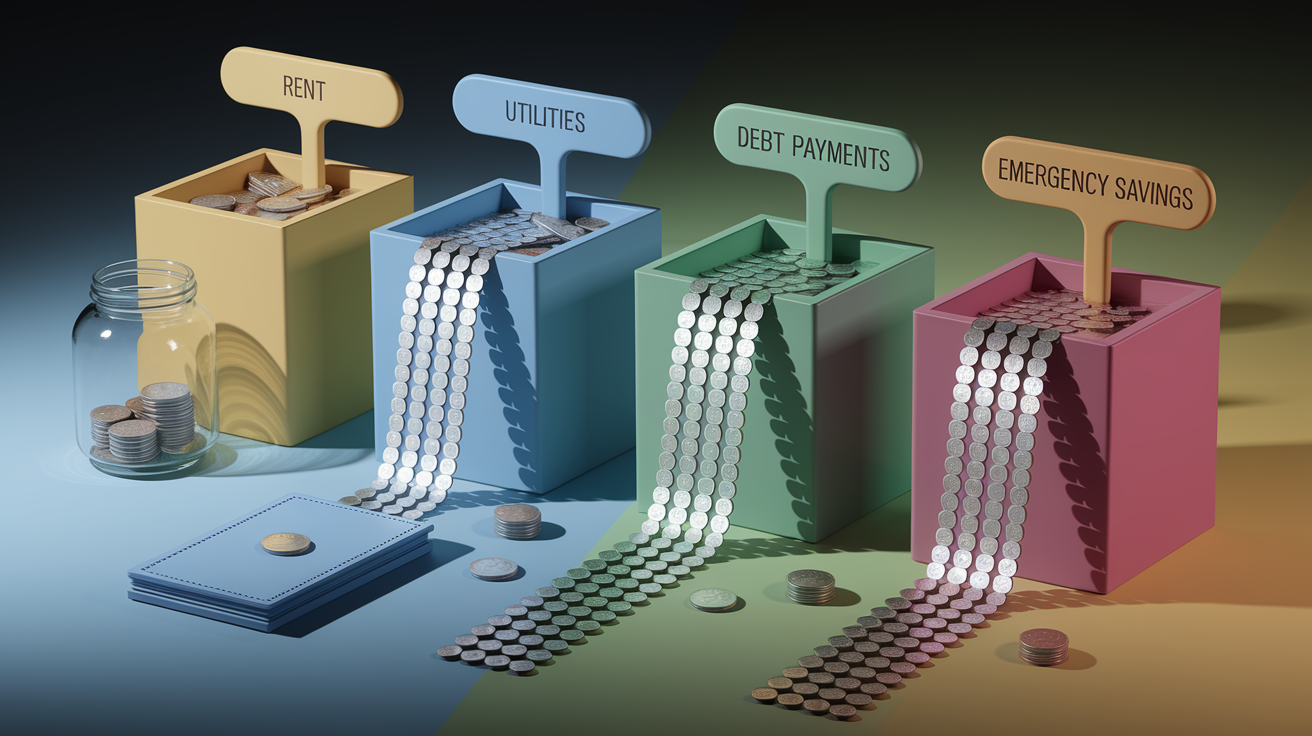
Rebuilding credit depends on predictable money management. You can’t rebuild payment history if your cash flow’s a mess. A realistic budget separates income from required costs and shows you where money’s available for savings, debt payments, and controlled spending.
List your monthly income first. Then divide expenses into four categories: housing (rent or wherever you’re staying now), utilities and essentials, required debt payments (cards, car, student loans), and savings. Fund them in that order. Housing and utilities come first because losing another place to live damages your credit even more. Debt payments come next because those accounts help you rebuild. Savings come before fun money because an emergency fund keeps you from leaning on credit cards when something breaks.
Build an emergency fund even if you start with 25 or 50 bucks a month. Aim for 500 to 1,000 dollars in the first year. That cushion prevents one surprise expense from triggering a late payment or maxing out a card. Creditors reviewing your file in 12 or 18 months want stable, on-time payments. A budget with planned savings supports that better than hoping nothing goes wrong.
Budget categories, in order:
- Housing: rent, insurance, temporary housing costs
- Utilities: electric, gas, water, internet, phone
- Required debt: minimum payments on all cards, installment loans, other revolving accounts
- Savings: emergency fund before entertainment, dining, non-essentials
Track cash flow week by week. If money runs out before the next paycheck, cut discretionary spending or find small income sources. Tighter budget control makes it easier to maintain the payment discipline that drives credit recovery.
Using Secured Credit Cards Strategically to Rebuild Credit

Secured credit cards are one of the fastest ways to add positive payment history after foreclosure. The card needs a security deposit, usually between 200 and 500 dollars, which becomes your credit limit. You use the card, pay the bill on time every month, and the issuer reports those payments to the bureaus. Six to twelve months of responsible use rebuilds the payment history section of your credit file.
The trick? Manage the card like a disciplined budget tool, not backup savings. Keep your balance between 10 and 30 percent of your limit. If you’ve got a 500-dollar limit, carry a statement balance between 50 and 150 dollars. Paying in full each month is better because it kills finance charges and reinforces zero-balance habits. Maxing out a secured card, even if you pay on time, signals high risk and slows your score improvement.
Six secured card practices that speed up rebuilding:
- Choose a deposit you can afford to lock up for 12 to 18 months without needing it back early.
- Keep utilization between 10 and 30 percent by paying balances down before the statement closes.
- Automate at least the minimum payment so you never miss a due date, then pay extra or in full manually when you can.
- Don’t max the card even in an emergency. Maxed cards hurt utilization and signal instability.
- Skip limit increases in the first six months. Focus on consistent payment behavior with your starting limit.
- Check monthly statements for accuracy and confirm the issuer reports to all three bureaus.
Some issuers graduate you from secured to unsecured after 12 months of on-time payments. That returns your deposit and might increase your limit without a new hard inquiry. Until then, treat the secured card as the foundation of your rebuilding plan and let the positive payment data stack up month by month.
Credit Builder Loans and Other Positive Tradelines After Foreclosure

Credit builder loans add installment payment history to a file that might only show revolving accounts or the closed foreclosure. These small loans, typically 300 to 1,000 dollars, work differently than regular loans. The lender holds your borrowed amount in a savings account while you make monthly payments. When you finish paying, you get the accumulated funds and the lender reports every on-time payment to the bureaus.
Foreclosure leaves you with a heavily negative mortgage tradeline. Adding a positive installment loan and a responsibly managed secured card diversifies your credit mix and shows lenders you can handle different types of credit. Payment history is the strongest scoring factor. An installment loan with 12 or 24 months of clean payments helps offset the foreclosure’s weight over time.
Credit unions, community banks, and some online lenders offer credit builder products. Monthly payments usually range from 25 to 100 dollars depending on loan amount and term. Choose a payment you can sustain without stress. Missing even one payment defeats the purpose and adds another late mark to a file you’re trying to repair. Finish the loan, collect your savings, and you’ve added a closed account in good standing plus months of positive data future lenders will see when they review your report.
Optimizing Payment History and Avoiding New Delinquencies

Improving payment history is the single most effective action in any rebuilding plan. Payment history accounts for the biggest chunk of your credit score. One missed payment in the next 12 months can erase weeks of progress.
Set up autopay for at least the minimum on every account. Credit cards, car loans, student loans, utilities that report to bureaus. Schedule autopay to process a day or two before the due date so weekends and holidays don’t cause delays. If you prefer manual payments, create calendar reminders that alert you the day before each bill is due. Check your bank balance before the payment processes to avoid overdrafts that trigger returned payments and late fees.
Four payment discipline practices that protect your rebuilding timeline:
- Enroll every credit account in autopay for the minimum, then manually pay extra or in full each month if cash flow allows.
- Use a shared digital calendar or phone reminders set 24 hours before each due date as backup.
- Review your bank account weekly to confirm autopay transactions posted and no payments bounced.
- If you can’t afford a minimum payment one month, contact the creditor before the due date to request a hardship plan or skip payment option instead of letting the account go late.
Timely bill payment matters more than payment size. Paying 25 dollars on time builds positive history. Paying 200 dollars three days late adds negative history. Consistency over months shifts your credit file from “high risk after foreclosure” to “stable payment behavior.” Every clean month moves your score higher and shortens the timeline before you qualify for better credit terms.
Managing Remaining Mortgage Related Debts and Deficiency Balances
Foreclosure doesn’t always erase your mortgage debt. If the home sold for less than what you owed, the lender might pursue a deficiency judgment for the remaining balance. Some states prohibit deficiency judgments on certain mortgages. In states that allow them, you could owe thousands even after losing the house.
Start by confirming whether you have a deficiency balance. Review your lender’s final account statement and any legal notices you received. If a deficiency exists, contact the lender or the collection agency holding the debt. Many creditors will negotiate a payment plan or accept a settlement for less than the full amount. Settling a deficiency stops collection calls, prevents a lawsuit, and closes the account on your credit report.
One caution: forgiven debt can trigger tax consequences. When a lender forgives part of a deficiency balance, the IRS might treat that forgiven amount as income. You’ll receive a 1099-C form reporting Cancellation of Indebtedness Income, and you’ll owe income tax on that amount. The tax bill is typically much smaller than the forgiven debt, but plan for it so you’re not surprised at filing time.
Three steps to address deficiency balances:
- Request a written breakdown of the deficiency from your lender or the collection agency. Original loan balance, sale price, fees, all of it.
- Negotiate a lump sum settlement or structured payment plan that fits your current budget. Get any agreement in writing before you send money.
- Consult a tax professional if the lender agrees to forgive part of the balance so you understand the income tax impact and can set aside funds if needed.
Resolving a deficiency removes lawsuit risk and might improve your debt to income ratio if you apply for new credit. It also cleans up your credit report by moving the account from “unpaid collection” to “settled” or “paid,” which looks better to future lenders even though the foreclosure itself stays on file.
Safe Rebuilding Practices and Avoiding Common Mistakes After Foreclosure

Predatory credit repair companies target people recovering from foreclosure. They promise to remove the foreclosure from your reports or boost your score 200 points in 30 days. Those promises are scams. Legitimate foreclosures can’t be erased unless the lender reported incorrect information. Paying someone to dispute accurate data wastes money and delays real recovery work.
Avoid new hard inquiries unless you need credit for a specific, planned purpose. Every application triggers a hard inquiry that can lower your score by a few points. Multiple inquiries in a short period signal desperation to lenders. Focus on the one or two accounts (secured card, credit builder loan) that will rebuild your file. Skip offers for store cards, new auto loans, or personal loans until your score stabilizes.
Stopping all credit use after foreclosure is another mistake. If you close your secured card or stop using credit entirely, your credit report freezes with mostly negative history and no new positive data. Lenders reviewing your file in 18 months will see the foreclosure and little evidence your financial behavior improved. Use credit in small, controlled amounts and pay it off to demonstrate recovery.
Five rebuilding mistakes that slow credit recovery:
- Paying upfront fees to credit repair companies promising to remove accurate foreclosure entries or raise your score overnight.
- Applying for multiple new credit accounts within a few months, creating a cluster of hard inquiries that lower your score and signal risk.
- Closing your oldest credit card to “start fresh,” which shortens your credit history and can hurt your score.
- Maxing out secured cards or new credit lines because “the damage is already done.” High utilization keeps your score low even with on-time payments.
- Ignoring your credit reports for a year or more, missing dispute windows and letting errors or identity theft go unnoticed.
Watch for credit repair scams: companies asking for payment before doing any work, guaranteeing specific score increases, or telling you not to contact the bureaus yourself. Legitimate help comes from nonprofit credit counseling agencies approved by the Department of Justice. They charge little or nothing for budget advice and creditor negotiation.
Tracking Your Credit Recovery Timeline and Milestones

Foreclosure credit recovery happens in stages. First three to six months focus on stabilizing payment history and correcting report errors. Next 12 to 24 months build a track record of on-time payments and diverse account types. The foreclosure stays on your credit report for up to seven years, but your score can improve significantly before then if you follow a consistent plan.
Monitoring your credit helps you see progress and catch new problems early. Many card issuers and banks offer free monthly credit scores. Use those scores to track direction. If your score climbs 10 or 20 points in three months, your plan’s working. Sign up for credit monitoring alerts so you get notifications when new accounts open, inquiries post, or derogatory items appear. Alerts can catch identity theft or reporting mistakes before they derail your rebuilding effort.
| Milestone | Timeframe | Expected Results |
|---|---|---|
| Immediate stabilization | 0–3 months | Stop new delinquencies, dispute report errors, establish autopay, open secured card or credit builder loan |
| Short term rebuilding | 3–12 months | Build 6–12 months of on-time payments, reduce utilization to 10–30%, see 20–50 point score increase |
| Medium term recovery | 12–24 months | Diversify credit mix, maintain clean payment history, qualify for unsecured credit, see 50–100 point score increase from post-foreclosure low |
| Long term improvement | 2–7 years | Foreclosure ages and loses scoring impact, positive accounts dominate report, return to near pre-foreclosure score or better |
Recovery speed depends on how damaged your credit was before the foreclosure and how consistently you execute your plan. People with mid-range scores who used credit responsibly saw their scores return to prior levels in about nine months. If your score dropped from the 700s to the 500s and you had other derogatory marks, expect 18 to 36 months of disciplined work before you reach the upper 600s or low 700s. The foreclosure stays visible. But lenders care more about recent payment behavior than a single negative event from two or three years ago.
Final Words
Start now: pull reports, stop new late payments, confirm balances, set autopay, and make a basic budget.
Audit reports for errors, use a secured card or credit-builder loan to add positive history, negotiate deficiencies, and avoid hard-inquiry hits or repair scams.
This step-by-step plan to rebuild credit after foreclosure focuses on quick stabilization and steady on time payments. Small wins add up, so monitor results and stick with the plan for real progress.
FAQ
Q: How long does it take to rebuild credit after a foreclosure?
A: Rebuilding credit after a foreclosure typically takes months to years. You can see meaningful improvement in 3–12 months with steady on-time payments, but the foreclosure stays on your report up to seven years.
Q: How to get 700 credit score in 6 months?
A: Getting a 700 credit score in 6 months requires focused actions: fix report errors, make every payment on time, add a secured card or credit-builder loan, keep utilization under 30%, and avoid new hard inquiries.
Q: How to repair your credit after a foreclosure?
A: Repairing your credit after a foreclosure starts with pulling your credit reports, disputing errors, stopping new late payments, setting up autopay, then using secured cards or credit-builder loans to rebuild positive history.
Q: How rare is an 830 FICO score?
A: An 830 FICO score is very rare. Scores above 800 are held by a small share of consumers and usually qualify you for the best interest rates and loan terms.