

Tired of watching your money drip away to high credit card interest?
Consolidating multiple cards into one personal loan can cut your interest, stop the juggling of due dates, and give you a clear payoff date.
If that sounds like you, you’re not alone.
This post walks you through five simple steps: total your balances, check your credit and prequalify, compare offers and fees, apply for the loan, and lock in a plan so you actually pay down the debt.
Understanding Personal‑Loan Debt Consolidation

Personal loan debt consolidation is taking out one installment loan and using it to pay off multiple credit card balances at once. You stop juggling four or five credit card bills, each with its own due date and interest rate, and start making one fixed payment to one lender until the debt’s gone.
A personal loan is an installment loan. You borrow a lump sum, lock in a fixed interest rate, and repay the balance over a set term, usually 24 to 60 months. Unlike credit cards, which let you keep borrowing as long as you stay under your limit, a personal loan closes the second you receive the funds. That structure forces you to pay down principal steadily.
Here’s the basic process:
- Add up all your credit card balances and current interest rates.
- Check your credit score and run prequalification checks with lenders.
- Compare loan offers for APR, term length, fees, and monthly payment.
- Accept a loan and receive the funds, or let the lender pay your cards directly.
- Pay off each credit card in full, then make the single monthly loan payment.
Consolidation works best when your personal loan APR is lower than what you’re paying on your cards and when one due date simplifies your budget. It won’t erase the debt. But it can reduce your interest expense and give you a firm payoff date.
Step‑by‑Step Process to Consolidate Credit Card Debt

-
List every credit card balance, APR, and minimum payment. Write down the exact payoff amount, interest rate, and monthly due date for each card. You need the total debt you’re covering.
-
Check your credit report and score. Pull a free report from each bureau and review your current FICO or VantageScore. Correcting errors or paying down small balances first can improve your prequalification odds.
-
Prequalify with two or three lenders using soft credit pulls. Soft inquiries let you see estimated APRs, loan amounts, terms, and fees without touching your credit score.
-
Compare each offer’s APR, origination fee, term, monthly payment, and total cost. Calculate the sum of principal plus interest plus any origination fee. That’s your true total repayment amount.
-
Submit a full application to the lender with the best terms. Expect a hard credit inquiry at this stage. Provide recent pay stubs, proof of income, and the payoff amounts and account numbers for each card.
-
Choose direct creditor payoff if the lender offers it, or receive the funds into your bank account. Direct payoff sends the loan proceeds straight to your credit card issuers. That stops interest from accruing during transfer and removes the risk you’ll spend the money elsewhere.
-
Set up automatic payments for the new loan and decide whether to keep old credit card accounts open. Keeping cards open with zero balances can help your credit utilization ratio. Closing them can prevent the temptation to rack up new balances.
Qualification Requirements for a Personal Loan
Lenders evaluate credit score, income, and debt to income ratio when deciding whether to approve your consolidation loan and what APR to offer. The best rates, often in the 6 percent to 12 percent range, typically go to borrowers with FICO scores of 670 or higher. Fair credit borrowers, scores around 580 to 669, may see APRs from 15 percent up to 36 percent. Some lenders will approve applicants with scores in the mid 500s, but expect higher rates and possibly smaller loan limits.
Income and employment stability matter as much as credit. Most lenders ask for proof of steady employment and calculate your debt to income ratio by dividing your total monthly debt payments, including the proposed new loan, by your gross monthly income. A DTI below 40 percent is common for approval. The lower your ratio, the better your chances of a competitive rate.
Documentation usually includes recent pay stubs or tax returns, a government issued ID, proof of address, and bank statements showing regular deposits. Self employed applicants may need one or two years of tax returns and a profit and loss statement. Having these documents ready before you apply speeds up underwriting and funding.
Comparing Personal Loan Costs vs Credit Card Interest

Credit card APRs often sit between 18 percent and 29 percent. Many consumers carry balances at rates above 23 percent. Personal loans offer fixed rates that can range from around 6 percent for excellent credit borrowers up to 36 percent for higher risk profiles. If your cards average 24 percent and you qualify for a personal loan at 12 percent, you’ll cut your interest expense roughly in half, assuming the same repayment timeline.
Total cost matters more than the APR alone. A lower interest rate stretched over a much longer term can still result in more total interest paid. Paying off ten thousand dollars at 12 percent over five years costs you more in interest than paying it off at the same rate over three years, even though the monthly payment is smaller at five years. Always compare the full repayment amount, principal plus interest plus fees, across your current cards and the new loan before deciding.
| Interest Type | Typical Range | Notes |
|---|---|---|
| Credit card APR | 18% – 29% | Variable rate; compounds daily; no fixed payoff date |
| Personal loan APR | 6% – 36% | Fixed rate; fixed term; includes origination fee in APR |
| Balance transfer card | 0% intro (then 18%+) | Promotional period 12–21 months; transfer fee 3%–5% |
Pros and Cons of Consolidating Credit Card Debt
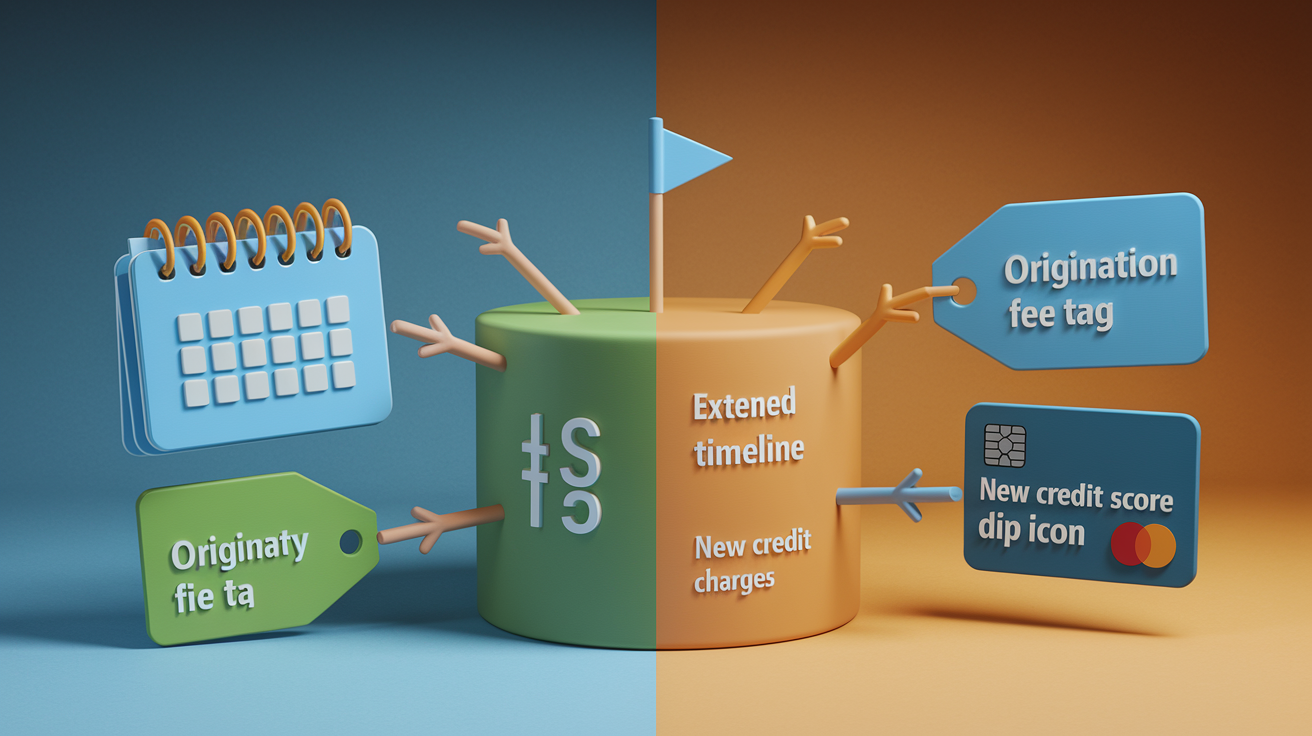
Consolidation can streamline your finances and save money. But it introduces new obligations and risks if not managed carefully.
Pros:
Single monthly payment. You replace multiple due dates and minimum payments with one predictable installment, making budgeting simpler.
Potentially lower interest rate. If you qualify for an APR below your card rates, you’ll pay less interest over the life of the loan.
Fixed payoff date. Unlike revolving credit, installment loans have a defined end. You know exactly when the debt will be gone.
May improve credit score. Paying off credit cards lowers your utilization ratio, ideally to zero, and on time loan payments build positive payment history.
Cons:
Origination fees add upfront cost. Many lenders charge 1 percent to 12 percent of the loan amount at closing, which reduces the net proceeds or increases the principal you owe.
Longer terms can increase total interest. Stretching repayment to lower the monthly payment may result in paying more interest overall, even at a lower APR.
Risk of reaccumulating credit card debt. If you keep old cards open and start charging again, you can end up with both the loan and new card balances.
Hard inquiry and new account can temporarily lower your score. Applying generates a hard pull, and opening a new loan reduces your average account age. Both can cause a small short term score dip.
How to Choose the Right Personal Loan Lender

Start by comparing the annual percentage rate each lender offers during prequalification. The APR already incorporates the interest rate and most fees, so it gives you an apples to apples cost comparison. Look for lenders that let you prequalify with a soft credit pull so you can shop multiple offers without hurting your score.
Examine fees and repayment terms side by side. Origination fees typically range from 1 percent to 12 percent of the loan. Some lenders charge none at all but offset that with a slightly higher interest rate. Check whether there’s a prepayment penalty if you want to pay off the loan early, and confirm the minimum and maximum loan amounts and terms the lender offers. A lender that funds loans within one to three business days may be more useful than one that takes two weeks if you’re trying to stop interest from piling up on your cards.
Customer service and borrower protections also matter when you’re committing to years of monthly payments. Read reviews about how the lender handles payment questions, hardship requests, and account changes. Some lenders offer rate discounts for autopay enrollment or for using a certain percentage of the loan to pay creditors directly. Ask about those perks before you finalize your choice.
Common Pitfalls When Consolidating Debt

Even a well structured consolidation can backfire if you overlook key details or fall into behavioral traps.
Closing credit card accounts immediately after payoff. Doing this can spike your utilization ratio because your total available credit drops and may hurt your credit score more than leaving accounts open with zero balances.
Failing to account for origination fees in savings calculations. If your lender deducts a 5 percent fee from a ten thousand dollar loan, you only receive $9,500 but owe interest on the full ten thousand.
Using the loan proceeds for something other than debt payoff. Receiving funds into your checking account and then spending part of it elsewhere leaves you with both a new loan and unpaid credit card balances.
Choosing a low monthly payment without checking the total cost. A longer term can cut your payment by a hundred dollars but add thousands in interest over the life of the loan.
Continuing to charge on paid off credit cards. If you don’t address the spending habits that created the original debt, consolidation just resets the cycle and you’ll end up deeper in debt.
Alternatives to Using a Personal Loan
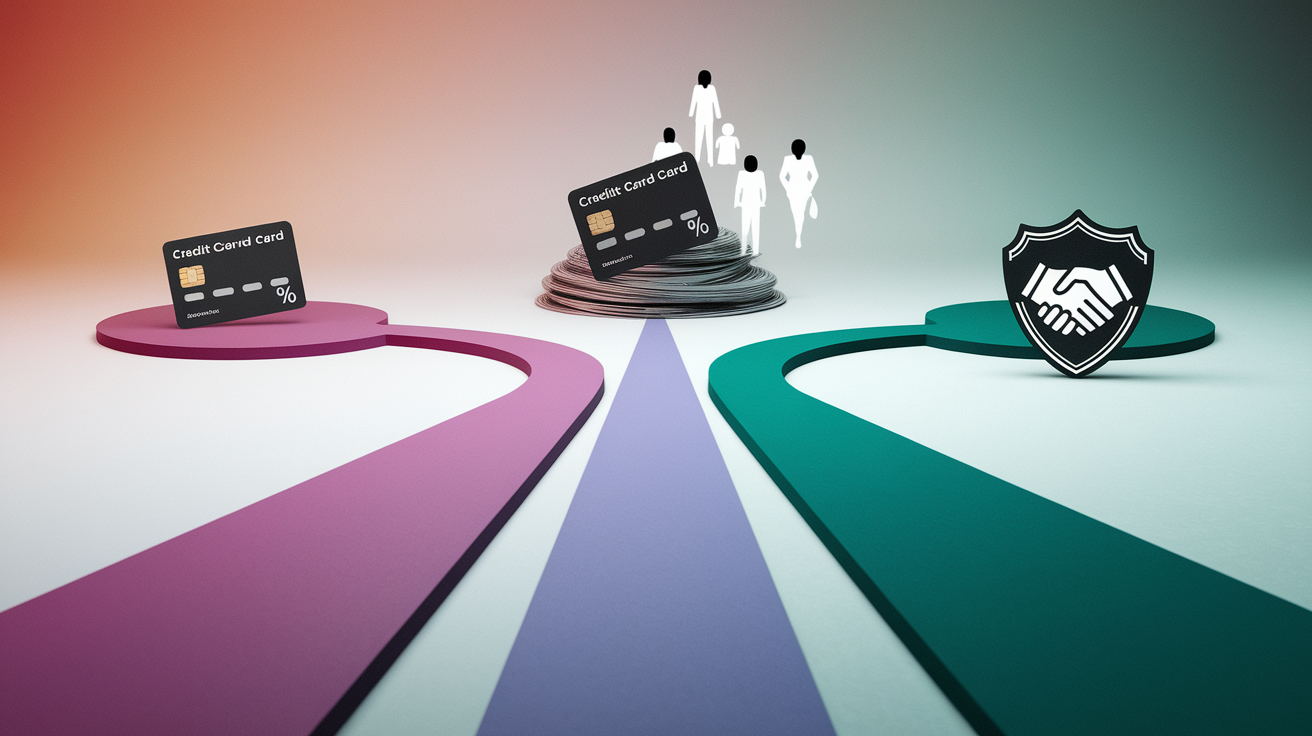
If a personal loan isn’t the right fit or you want to explore other options before committing, several alternatives can help you tackle credit card debt.
Balance transfer credit cards offer a promotional 0 percent APR period, often 12 to 21 months, on transferred balances. You’ll pay a one time transfer fee, usually 3 percent to 5 percent of the amount moved, but if you can pay off the balance before the promo ends, you’ll save nearly all the interest you would have paid on your cards. This works best for smaller balances and borrowers with good to excellent credit who can qualify for the longest intro periods and who are disciplined enough to pay off the debt before the rate jumps.
Nonprofit credit counseling and debt management plans provide structured repayment through an accredited agency. A counselor reviews your finances, negotiates lower interest rates or waived fees with your creditors, and consolidates your payments into one monthly deposit to the agency, which then distributes funds to each creditor. Plans typically run three to five years. You may be required to close your credit card accounts during the program. Setup fees and monthly service charges are usually modest, often under $50 per month, and the program can offer relief if you don’t qualify for a low rate loan.
Hardship programs and direct creditor negotiation are options if you’re facing temporary financial stress or already behind on payments. Many card issuers offer hardship plans that reduce your interest rate, waive fees, or lower minimum payments for a set period, often six to twelve months. You can also try negotiating a lump sum settlement for less than the full balance if the account is seriously delinquent, though settled accounts will hurt your credit and may trigger taxable income on the forgiven amount. These paths are worth exploring if consolidation loans are out of reach or if your goal is to avoid adding new debt.
Final Words
Use a personal loan to combine multiple cards into one fixed-rate payment; we explained what consolidation means and how it differs from revolving credit.
You also got a clear 7-step process, qualification criteria, cost comparisons, pros and cons, common pitfalls, and solid alternatives.
If you’re ready, start by checking balances, prequalifying, and comparing offers; learning how to consolidate credit card debt with a personal loan can simplify payments and often save interest over time.
Take it one step at a time; it’s a practical move toward calmer finances.
FAQ
Q: Is it smart to take a personal loan to consolidate credit card debt?
A: Taking a personal loan to consolidate credit card debt can be smart when it lowers your interest and gives one fixed payment; weigh fees, loan term, and the risk of running up cards again.
Q: Can I pay my credit card debt with a personal loan with the same company?
A: You can often pay credit card debt with a personal loan from the same company, but some issuers block transfers or charge fees; check your lender’s rules and ask about the payoff process and timing.
Q: How much is the payment on a $50,000 consolidation loan?
A: The payment on a $50,000 consolidation loan depends on interest rate and term; for example, at 8% APR it’s about $1,013 per month over 5 years or about $606 per month over 10 years.
Q: How to get rid of $30,000 credit card debt?
A: To get rid of $30,000 credit card debt, list balances and rates, pick a plan such as a personal loan, balance transfer, debt management, or negotiation, cut spending, boost payments, and get nonprofit counseling if overwhelmed.