

Think six months of savings is enough?
If your paychecks come on a fixed schedule, maybe.
But if your income swings, you should aim for six to twelve months of bare-bones living costs.
That means rent, meds, utilities, groceries, insurance, transport, and minimum debt.
A bigger cushion buys time when clients ghost, seasons slow, or commissions vanish.
This post shows how to pick a spot in the 6 to 12 month range, calculate a realistic monthly baseline, and build a simple saving plan you can actually follow.
Determining the Right Emergency Fund Size for Irregular Income

You need six to twelve months of bare-bones living costs when your paychecks don’t arrive on a fixed schedule. That’s double what people with regular salaries aim for. Bare-bones means rent, utilities, groceries, medications, insurance, transportation, and minimum debt payments. Skip everything else. If you can’t survive the month without it, it’s in. If you can, it’s out.
Let’s say your baseline is $3,000 a month. Your target sits somewhere between $18,000 and $36,000. That’s a big range, and where you land depends on how wild your income swings get.
A bigger cushion keeps you alive when clients ghost you, seasonal work dries up, or projects get delayed for reasons outside your control. You can’t count on next month’s income the way someone with a salary can. Pull up twelve months of bank statements and find the expenses you absolutely cannot skip. Multiply that number by six for your floor, twelve for your ceiling, then pick a spot in the middle based on how unpredictable your money actually is.
Different work situations call for different targets. Here’s where to start.
Freelancers with a steady pipeline: Six to nine months works if you’ve got regular clients and can see work coming a few weeks out.
Seasonal workers with zero income for part of the year: Cover your entire off-season plus one or two extra months. Usually nine to twelve months total.
Commission earners whose pay jumps around: Go for nine to twelve months if your income depends on market stuff you can’t predict or control.
Gig workers hopping between apps: Six to nine months if you can shift platforms and keep some baseline coming in. Push to twelve if demand drops without warning.
Small business owners with overhead: Nine to twelve months to cover both business expenses and your personal bills when revenue tanks.
Calculating Monthly Expenses to Set an Accurate Emergency Fund Target
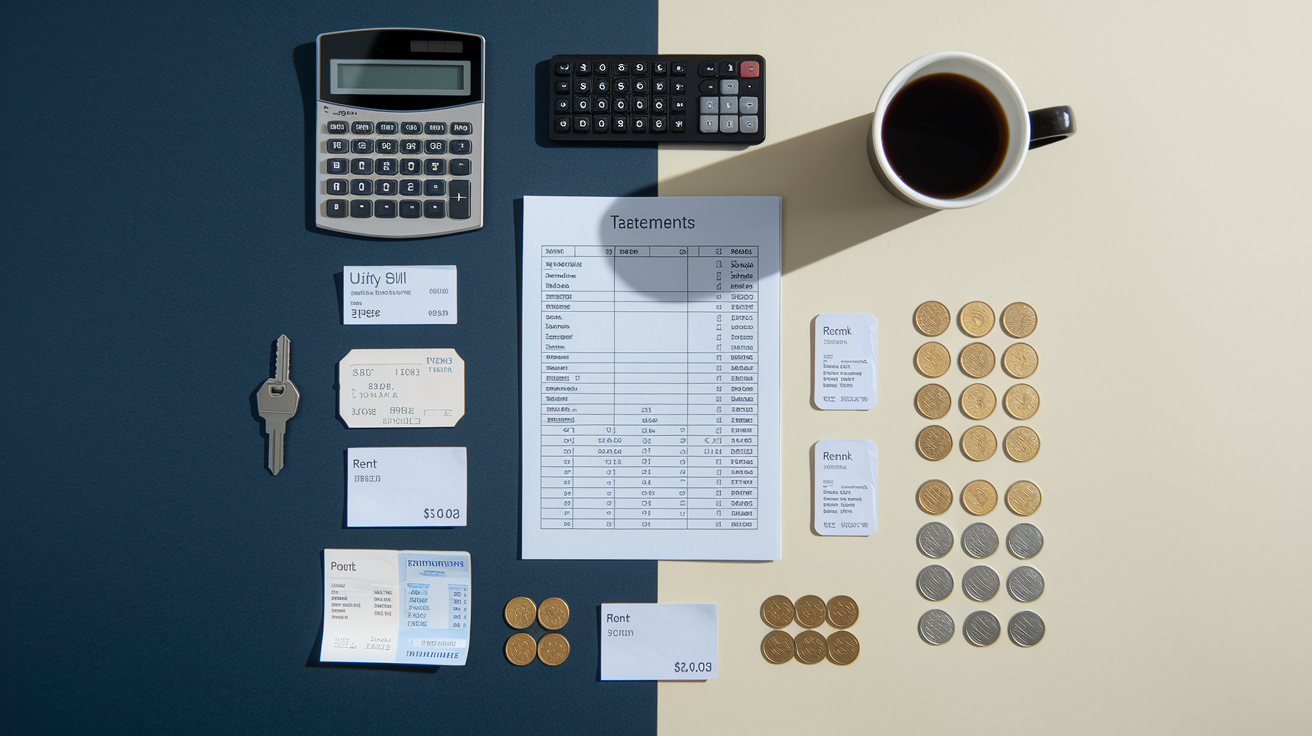
Pull every bill you have to pay to keep your household functioning. Groceries, rent, utilities, medications, insurance, realistic gas or transit costs, minimum debt payments. Leave out restaurants, streaming services, entertainment, anything you’d cut if money stopped coming in tomorrow. That’s your floor.
Go back through twelve months of actual spending. Not what you planned to spend. What actually left your account. Average those twelve months so you’re not fooled by one expensive month or one cheap one. If the average came to $3,200 but you know you can drop $200 by skipping takeout and pausing subscriptions, use $3,000. That conservative number is what you multiply by six to twelve.
Here’s the process:
- Write down every non-negotiable monthly cost: housing, utilities, groceries, medications, insurance, transportation, debt minimums.
- Add up twelve straight months of real spending in each category. Divide by twelve.
- Strip out discretionary stuff like eating out, vacations, gifts, subscriptions you don’t need to survive.
- Round to a realistic number you could live on for a month with zero income. Use that with your six-to-twelve multiplier.
Emergency Fund Strategies for Freelancers and Gig Workers

Budget from expenses, not income. Figure out what you need to survive each month, then build a system that saves extra during good months and fills gaps during bad ones. This keeps you from blowing through windfalls and running dry when work slows.
Try living on last month’s income. Keep your earnings in savings and only move what you need for the upcoming month into checking. If you earn more than you need, push the extra into your emergency fund. If you earn less, pull from what you saved last month. Automate the transfer so you don’t accidentally spend everything when a big payment hits.
Freelancers with steady client work should aim for six to nine months. If your income swings hard or you depend on two or three big clients, stretch to nine or twelve. A bigger cushion buys you time to land new work or finish long projects without panic.
Track twelve months of actual income so you know what you really make, not what you hope to make.
Save a fixed percentage of every payment during high months instead of saving leftovers at the end.
Dump windfalls straight into your emergency fund: tax refunds, surprise bonuses, side gig payments.
Keep a small buffer in checking for day-to-day stuff. Hold the bulk of your fund in an interest-bearing savings account you can access fast.
Check your target every quarter using updated income and expense numbers. Adjust for new clients, rate changes, cost of living shifts.
Don’t lock emergency money in investments with withdrawal penalties. You need it available when your car dies or a medical bill shows up.
Cash-Flow Systems for Managing Irregular Income and Protecting Your Emergency Fund

A cash flow system puts a buffer between what you earn and what you spend. Keep most of your income in a holding account, transfer only what you need for the current month into checking, and save or pull from the reserve as your earnings bounce around. This stops a slow month from instantly threatening your rent payment.
When you have a good month, move the extra into your emergency fund. When you have a bad month, pull from what you saved earlier to cover the gap. Automate the monthly transfer from savings to checking so you don’t have to decide every time. This matters most for seasonal workers and commission earners who go months without income or see huge swings between quarters.
Operating Account vs Reserve Account
Split your emergency fund into two pieces. The first piece sits in a checking-linked account and holds one to two months of expenses for immediate needs. The second piece lives in a separate interest-bearing account and holds the rest of your target, anywhere from four to ten months. This gives you quick access to some money while letting the bulk earn a little interest.
| Account Type | Purpose | Liquidity Level | Recommended Balance |
|---|---|---|---|
| Checking buffer | Cover variable small expenses and monthly transfers | Instant access | 1–2 months of critical expenses |
| High-yield savings | Hold the majority of emergency reserves with interest | Same-day or next-day transfer | Remaining 4–10 months of target fund |
| Money market account | Alternative to high-yield savings with similar access | Check-writing or debit access | Optional split of reserve portion |
| Short-term CD ladder | Lock a small portion for higher rate if liquidity allows | Penalty or wait for maturity | Only surplus beyond 12 months |
Where to Keep an Emergency Fund When Your Income Is Unpredictable

Keep a little in checking for groceries and gas. Put the rest in an interest-bearing savings account you can tap the same day or within one business day. Online banks and credit unions usually pay more than big traditional banks. Look for accounts with no monthly fees, no minimum balance, and rates above the national average.
Don’t lock your entire emergency fund in long-term CDs or throw it in the market. You need fast access when your transmission blows, a medical bill lands, or your water heater dies. Liquidity beats yield for this money. If you’ve saved past your twelve-month target, you can put a small slice into short-term CDs for a better rate. But leave the core fund somewhere you can grab it without penalties.
Money market accounts sit in the middle. They often pay a bit more than regular savings and let you write checks or use a debit card for bigger withdrawals. Compare rates at traditional banks, online banks, and credit unions to find the best mix of rate, access, and service.
High-yield savings account: Easy access, decent rates, FDIC insured. Good for the bulk of your fund.
Money market account: Similar to high-yield savings, with optional check or debit access if you want transaction flexibility.
Checking buffer: Keep one to two months of expenses in checking or linked savings for immediate small purchases and monthly bills.
Short-term CD ladder: Only use this for amounts beyond your twelve-month target if you want a modest rate bump and can handle staggered maturity dates.
Step-by-Step Plan to Build an Emergency Fund with Variable Pay

Building an emergency fund when your income jumps around takes a clear plan and discipline to save during good stretches. Here’s the sequence.
- Calculate your critical monthly expenses: Add up rent, utilities, groceries, medications, insurance, transportation, minimum debt payments. That’s your baseline.
- Set a starter goal of three months: Multiply your monthly baseline by three to create an initial target that cuts immediate stress and gives you something to build from.
- Open two accounts: One checking-linked account for one to two months of expenses. One high-yield savings or money market account for the rest.
- Automate contributions every time you get paid: Pick a fixed percentage of gross income to move into your emergency fund each payment, whether that’s weekly, project-based, or seasonal.
- Funnel windfalls and peak earnings straight to savings: Tax refunds, gifts, side hustle money, surplus from good months. All of it goes into your reserve account to speed progress toward six to twelve months.
- Review every quarter: Use a rolling twelve-month average of income and expenses to update your baseline, reassess your target, and adjust your contribution percentage as your work and life shift.
Examples of Emergency Fund Targets for Common Irregular Income Situations

A freelancer spending $4,000 a month on necessities should target somewhere between $24,000 and $48,000. If clients are steady and projects predictable, six months at $24,000 might be enough. If income swings hard or a handful of clients bring in most of the money, push toward twelve months at $48,000. Keep one to two months in a checking-linked account, rest in high-yield savings.
A seasonal worker with $2,500 in monthly critical costs faces a full off-season without pay. Multiply $2,500 by six months to hit $15,000 minimum, or by twelve to reach $30,000 if the off-season drags or feels unpredictable. During the four or five months of high season, move 30 to 50 percent of extra income into the emergency fund to build the reserve before work stops.
A commission-based salesperson should calculate the biggest quarterly shortfall they’ve seen and add a two-month buffer. If one quarter’s earnings typically drop by $9,000 and monthly expenses run $3,000, save at least $9,000 plus $6,000 for two months. Total: $15,000. If commission swings are wild across multiple quarters, expand to nine or twelve months of expenses to cover long dry spells.
| Worker Type | Monthly Critical Expenses | Recommended Fund Range |
|---|---|---|
| Freelancer with steady client flow | $4,000 | $24,000–$48,000 (6–12 months) |
| Seasonal worker with defined off-season | $2,500 | $15,000–$30,000 (6–12 months) |
| Commission earner with quarterly volatility | $3,000 | $15,000–$36,000 (shortfall + 5–12 months) |
Maintaining, Reassessing, and Replenishing an Emergency Fund for Irregular Earners

Check your emergency fund every three months using a rolling twelve-month average of income and expenses. Your client base, work situation, and cost of living can shift fast when income bounces around. Quarterly reviews catch changes early and let you adjust before a gap opens. If expenses climbed or income got more volatile, bump your contribution percentage during the next strong month.
Replace any money you pull from the fund as soon as you can. Treat withdrawals for car repairs, medical bills, or home fixes like temporary loans to yourself. During the next month or quarter when income beats your baseline, send the surplus back into the reserve before you resume normal savings or discretionary spending.
Update baseline monthly expenses each quarter to reflect rent hikes, new insurance premiums, household size changes.
Check income volatility by comparing the past three months to the quarter before. Adjust your target if swings have gotten wider.
Measure your balance against your target range. Set a new contribution goal if you’ve dropped below six months or pushed past twelve.
Look ahead for seasonal gaps by checking your calendar for known slow periods. Plan higher contributions before those months arrive.
Track what you need to restore after each emergency withdrawal. Mark the amount somewhere visible like a spreadsheet or budgeting app.
Final Words
Start by calculating your bare-minimum monthly costs and set a starter fund of 3 months. Then grow that to a larger target based on how steady your pay is.
Keep 1–2 months in checking for bills and put the rest in a high-yield savings account. Automate transfers, save windfalls, and review your numbers every quarter.
If you’re wondering how much emergency fund for irregular income, aim for 6-12 months of critical expenses—6-9 months for moderate variability, 9-12 for high variability. Small, steady moves get you there.
FAQ
Q: What is the 3 6 9 rule for emergency fund?
A: The 3-6-9 rule for an emergency fund means saving 3, 6, or 9 months of essential expenses based on income stability. Use 3 months for steady pay, 6 for single-income or moderate risk, and 9 for irregular pay.
Q: Is $20,000 or $50,000 too much for an emergency fund?
A: Whether $20,000 or $50,000 is too much for an emergency fund depends on your expenses and income variability. Aim for 3-6 months for steady pay and 6-12 months for irregular income and match the amount to that target.
Q: What is the 70/20/10 rule money?
A: The 70/20/10 rule means using 70% of income for living costs, 20% for savings or debt repayment, and 10% for wants or giving, helping you cover needs while steadily building a cash cushion.