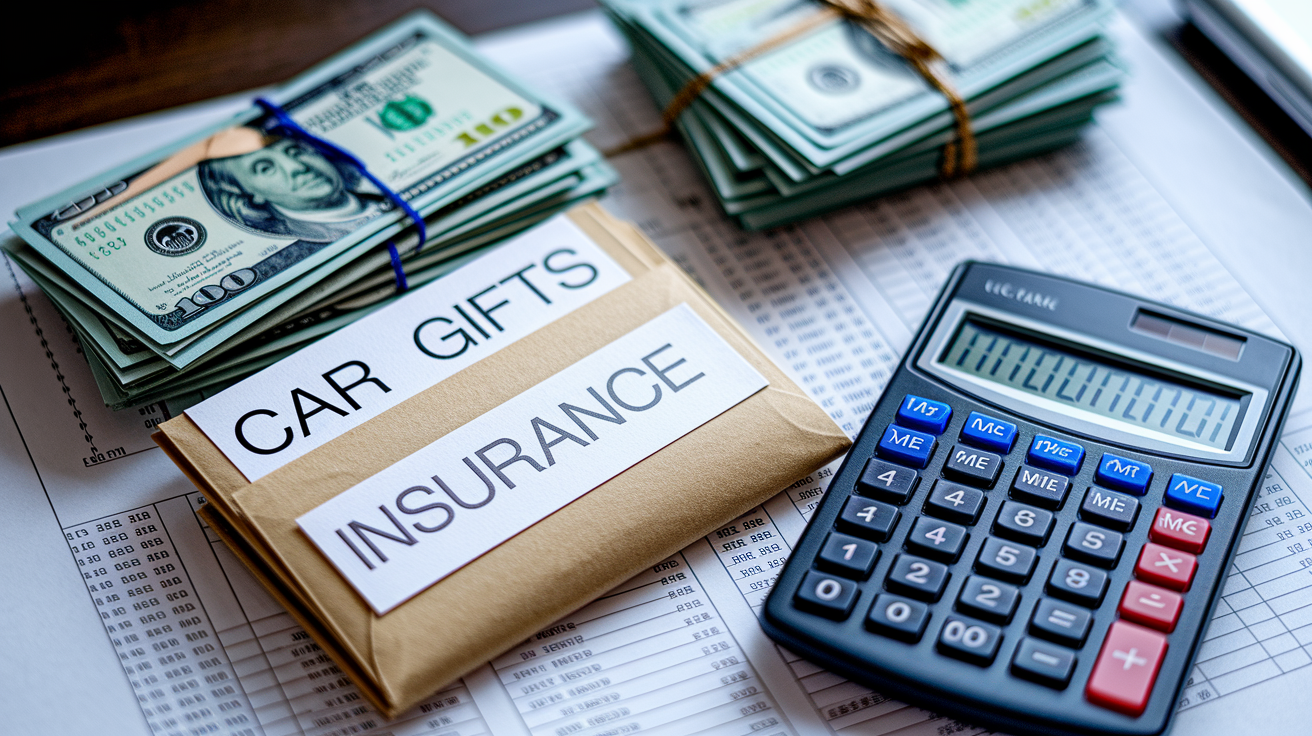

Think “unexpected” bills have to ruin your month?
Most don’t.
Many big, irregular costs are predictable, like insurance, holidays, and car repairs, and you can plan for them.
A sinking fund breaks a $2,000 repair into small monthly payments so you pay cash, not credit.
If that sounds like you, you’re not alone.
This post walks you through simple steps to pick expenses, set monthly targets, and automate savings.
By the end, you’ll have a plan to stop scrambling and keep those sporadic bills from stealing your peace.
Practical Steps for Setting Up Sinking Funds for Predictable Sporadic Expenses

A sinking fund is money you save each month for a specific expense you know is coming, but doesn’t happen every month. It turns big, irregular bills into small, regular contributions so you can pay cash instead of scrambling or borrowing when the bill arrives. Think of it as turning a $2,000 car repair you know will happen sometime this year into a calm $167 monthly line item in your budget.
Setting up sinking funds for sporadic expenses starts with identifying which irregular costs are predictable enough to plan for. These are different from true emergencies. An emergency fund is for surprises like a chipped tooth or a broken furnace. A sinking fund is for things you can see coming: the twice-a-year insurance premium, annual Amazon Prime renewal, Christmas gifts, or eventual new tires. If you can estimate the cost and roughly when you’ll need the money, it belongs in a sinking fund.
Breaking large or infrequent expenses into monthly chunks prevents last-minute panic and keeps you out of debt. Instead of putting a $700 vet bill on a credit card and paying interest for months, you’ve already set aside the cash. Here’s how to create a sinking fund in four simple steps:
-
Choose the expense. Pick one predictable irregular cost and write down what it is, how much it’ll cost, and when you’ll need the money.
-
Decide where to store it. Use a separate savings account, a sub-account inside your bank, or a budgeting app that lets you label funds.
-
Calculate your monthly contribution. Divide the total cost by the number of months until it’s due. For example, $840 annual life insurance premium divided by 12 months equals $70 per month.
-
Add it to your monthly budget. Treat the sinking fund contribution like any other bill and transfer that amount into your chosen storage spot each month.
That simple formula (total cost divided by months) is the foundation. If you need $1,000 for Christmas and it’s September (three months away), you save about $330 each month. When the holiday arrives, the money’s ready and guilt-free.
Identifying Sporadic Expenses That Need a Dedicated Sinking Fund
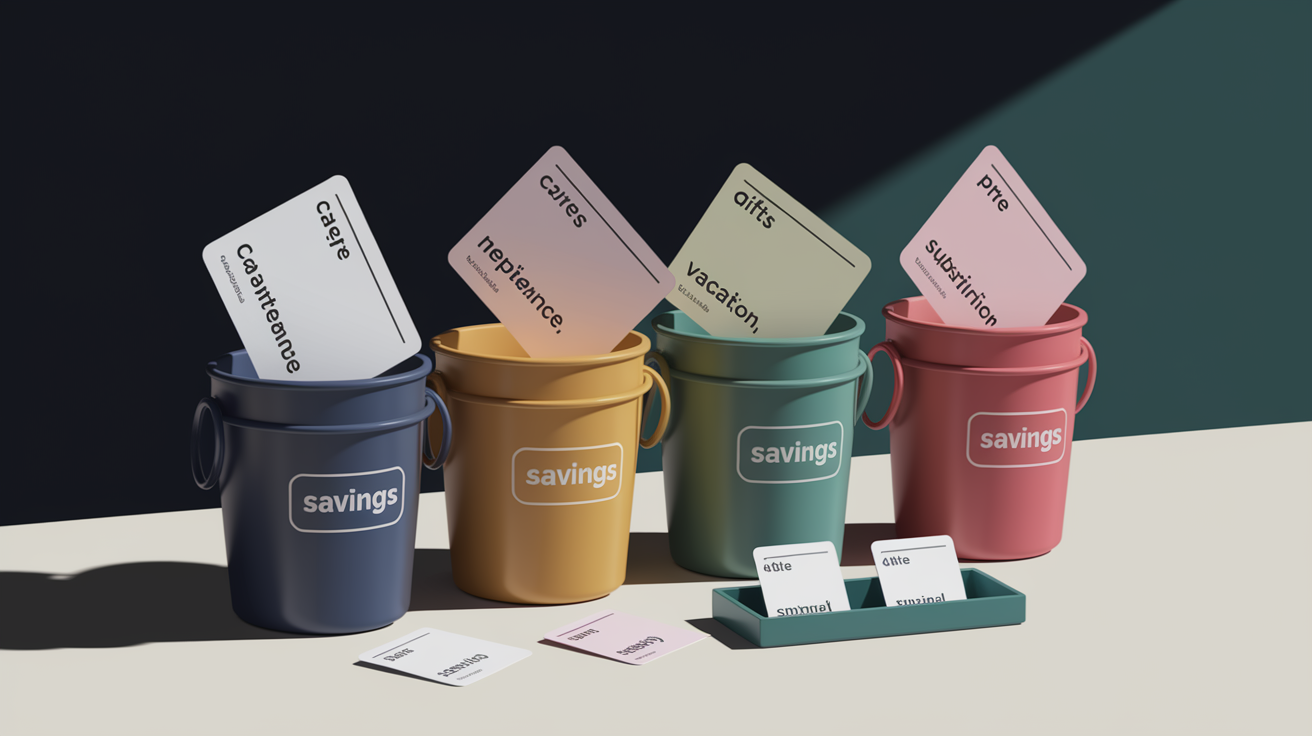
Not every irregular expense deserves its own sinking fund. Creating too many tiny buckets becomes confusing and hard to maintain. A useful sinking fund candidate meets four conditions: it’s predictable (likely to happen), irregular (doesn’t cost the same amount every month), large enough to disrupt your normal budget, and easy enough to estimate using last year’s bill, a quote, or a rough average.
Start by listing expenses that fit those criteria. A $600 car repair fund makes sense because repairs are predictable over a year and $600 would throw off most monthly budgets. A $20 magazine subscription renewal probably doesn’t need its own fund because it won’t cause stress or force you onto a credit card. Focus on amounts that matter and events you can see coming.
Common sinking fund categories include:
- Car maintenance and repairs
- Home maintenance and appliances
- Medical copays and deductibles
- Annual or semi-annual insurance premiums
- Vacation and travel
- Holiday and birthday gifts
- Annual subscriptions (software, memberships, streaming bundles)
- School supplies and seasonal clothing
- Pet care (vet visits, vaccines, grooming)
- Furniture or appliance replacement
Most households start with three to five sinking funds and expand only when the first set feels automatic. Pick the expenses most likely to cause you stress, force you to borrow, or blow up your budget if they land in the wrong month.
How to Calculate Monthly Contributions for Each Sinking Fund
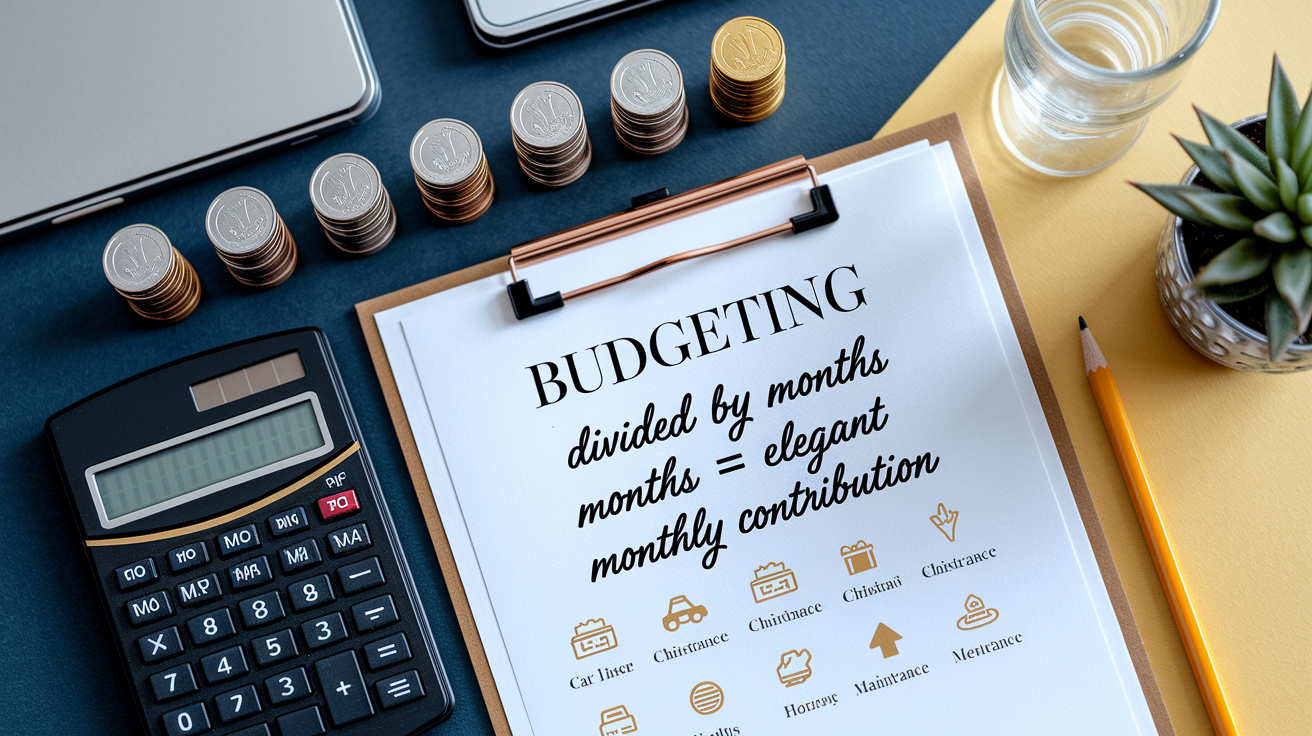
The core calculation is straightforward. Take the total cost of the expense and divide it by the number of months (or pay periods) until you need the money. The result is the amount you save each period. If you’re paid twice a month, you can split the monthly target across two paychecks to keep the per-paycheck number smaller and easier to manage.
For example, if you estimate $2,000 in car repairs over the next year, divide $2,000 by 12 months to get about $167 per month. If you’re paid twice monthly, save roughly $83 per paycheck. If a $600 car insurance premium is due in six months, you need $100 per month or $50 per paycheck. The math is simple, but writing it down and adding it to your budget is what makes it real.
Here are five practical tips for calculating contributions:
- Use last year’s actual costs as your starting estimate for recurring annual expenses.
- For new expenses, get a quote or look up typical costs online to avoid under-saving.
- Round up slightly to build a small cushion in case the final bill’s higher than expected.
- Include starting balances if you already have partial savings for that goal.
- Recalculate whenever the cost estimate or timeline changes so your contributions stay on track.
Below are three quick examples showing how the formula works for different timelines and amounts:
| Expense | Total Cost | Months Until Due | Monthly Contribution |
|---|---|---|---|
| Car insurance premium | $600 | 6 | $100 |
| Christmas gifts | $1,000 | 3 | $333 |
| Annual home maintenance | $2,000 | 12 | $167 |
If the monthly number feels too high, you’ve got three options: lower the goal amount, extend the timeline by starting earlier next year, or start with a smaller contribution and increase it when you have room in the budget. The key is to start somewhere and adjust as you go.
Choosing Accounts and Tools to Store Sinking Funds Effectively
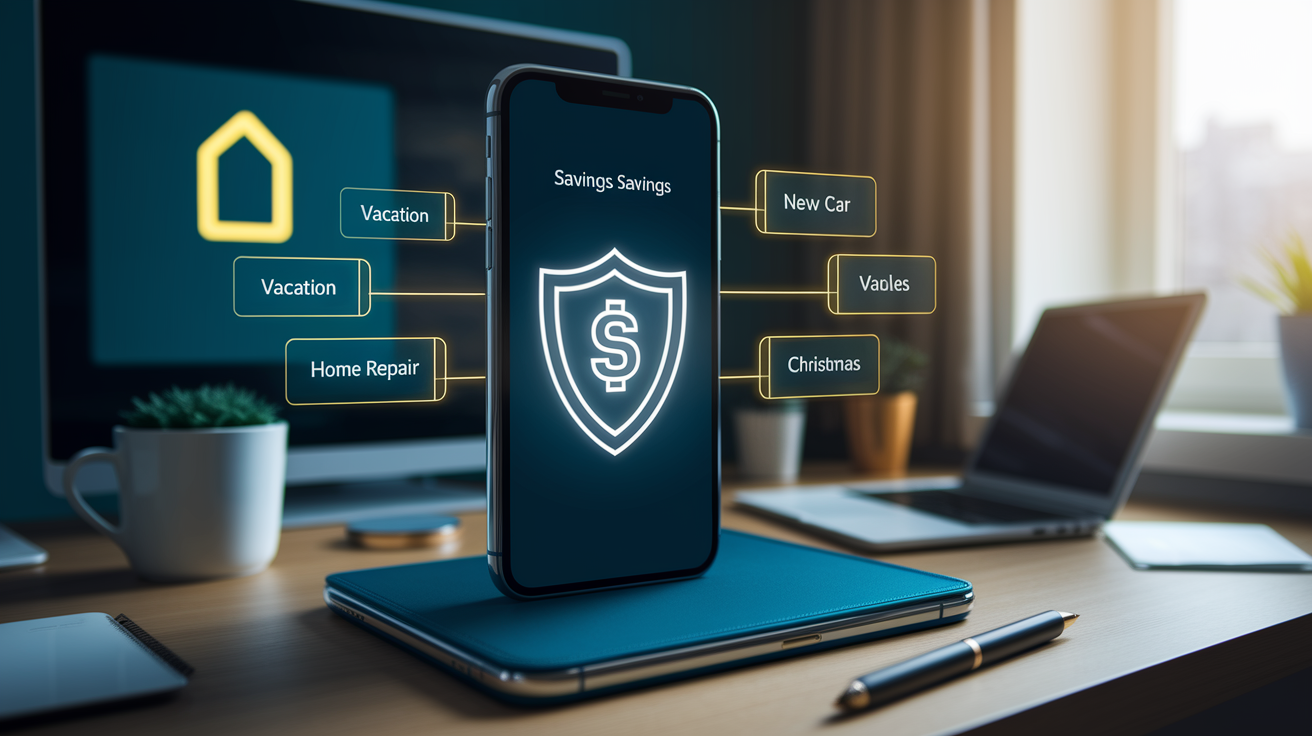
Where you keep sinking funds matters less than keeping them clearly separated from everyday spending money. The right storage method depends on how many funds you’re managing, how much interest you want to earn, and how complicated you’re willing to let your banking setup become. Some people prefer physical separation with multiple savings accounts. Others keep everything in one checking account and use budgeting app categories to label each dollar’s job.
A separate savings account works well when you want a hard boundary between spending and saving. Look for accounts with no minimum balance requirements and no monthly fees so your small contributions aren’t eaten by service charges. For very large sinking funds (like saving $10,000 for a used car or $20,000 for a down payment), consider a high-yield savings account or money market account to earn interest while you wait. As of late 2025, some online savings accounts offered around 3 percent APY, and balances up to $250,000 are covered by FDIC insurance. That extra interest won’t change your life on a $500 fund, but on a $15,000 fund over two years it’s worth having.
Many budgeting apps let you create labeled funds or digital envelopes inside a single checking or savings account. You add a category, name it (Vacation, Car Repairs, Christmas), enter your starting balance and monthly contribution, and the app tracks how much is allocated to that goal. This method keeps your bank account count low and gives you a single dashboard showing all your sinking fund balances in one place. It’s especially helpful if you’re managing five or six different goals and don’t want to juggle multiple login credentials or account numbers.
Here are the pros and cons of common storage options:
- Checking account with app categories: Easy to manage, no new accounts to open, instant visibility, but requires discipline not to spend allocated money.
- Separate savings account: Clear physical separation, reduces temptation, but may involve transfer delays and account-opening paperwork.
- Sub-accounts within one savings account: Keeps funds labeled and separate without multiple institutions, but not all banks offer true sub-account features.
- High-yield savings or money market: Earns interest on larger balances, FDIC insured, ideal for long-term goals, but may have transfer limits or minimum deposit requirements.
- Budgeting app fund feature: Tracks multiple goals in one account, automates contribution calculations, shows reminders and due dates, but depends on keeping the app updated.
- Spreadsheet tracking: Free, fully customizable, works with any account, but manual and easy to forget or let slide.
A practical middle ground is to use one high-yield savings account for your largest sinking fund (new car, down payment, big home repair) and keep smaller funds as categories inside your main budgeting system. For example, one household kept a separate account labeled New Car Fund with $300 per month going in automatically, while Christmas, Gifts, and Annual Subscriptions lived as line items in their monthly budget and sat in the regular savings account. This kept banking simple but still protected the big goal from accidental spending.
Automation Techniques for Maintaining Sinking Funds Consistently

Automation is what turns good intentions into actual progress. If you rely on remembering to transfer money every month, you’ll forget during busy or stressful weeks and fall behind. Setting up automatic recurring transfers from checking to savings (or automatic funding inside a budgeting app) removes the decision and keeps contributions flowing even when life gets chaotic.
The simplest automation is a scheduled transfer that runs the day after each paycheck hits your account. If you’re paid on the first and fifteenth, schedule two smaller transfers instead of one large monthly move so the amount per paycheck feels manageable. Many banks and budgeting apps also offer smart funding that calculates how much to move per paycheck based on your goal amount and due date, adjusting automatically as months pass. Some apps even let you assign a virtual debit card to a specific sinking fund envelope so you can only spend what’s actually in that bucket.
Five automation tactics that keep sinking funds on track:
-
Schedule recurring bank transfers the day after payday so the money moves before you can spend it on something else.
-
Use app auto-funding features that divide your goal by remaining pay periods and adjust the transfer amount as deadlines approach.
-
Link sinking fund categories to specific virtual cards so when you swipe for vacation expenses, the app only lets you spend your vacation balance.
-
Set calendar reminders two weeks before each sinking fund expense is due so you can confirm the balance is ready and adjust if needed.
-
Enable balance alerts that notify you when a sinking fund hits 75 percent or 100 percent of the goal so you know when to stop contributing or reallocate to another fund.
Optional micro-savings strategies can boost contributions without extra effort. Rounding up each debit card purchase to the nearest dollar and sweeping the spare change into a sinking fund adds a few extra dollars each week. Some employers allow you to split direct deposit across multiple accounts, so a fixed amount lands in your sinking fund savings automatically while the rest goes to checking. These small automated boosts won’t replace your main monthly contribution, but they can help you reach goals a month or two faster.
Managing Multiple Sinking Funds Without Overwhelm

Starting with three to five sinking funds keeps the system simple and sustainable. Pick the expenses that cause the most stress or are most likely to force you onto a credit card if you’re not prepared. Common high-impact starters are annual bills (insurance, subscriptions), car and home maintenance, and holiday or travel spending. Once those three feel automatic, you can add one or two more if your budget and energy allow.
Creating ten or fifteen tiny sinking funds sounds thorough, but it usually backfires. Too many micro-categories make tracking exhausting, and small balances spread across many buckets don’t grow fast enough to feel motivating. If you’re saving $10 per month into eight different funds, none of them will be ready when you need the money. It’s better to group similar expenses into broader categories and prioritize the ones that matter most right now.
Common pitfalls and how to simplify:
- Too many small funds: Combine low-impact categories into one bucket (like merging Plumbing, Roof, and Lawn Care into Home Maintenance).
- Balances too low to be useful: Pause or eliminate funds for expenses under $200 per year unless they’re high-stress. Just budget them as they come.
- Losing track of what each fund is for: Use clear names and due dates in your app or spreadsheet so you remember the purpose six months later.
- Guilt about changing priorities: If a sinking fund no longer fits your life, stop contributing and reallocate the balance to a higher-priority goal without shame.
Prioritization is ongoing. If saving for a vacation suddenly matters less than replacing a dying appliance, shift your monthly contribution from the vacation fund to the appliance fund. One household paused their Backyard Makeover fund (originally $50 per month) and redirected that money plus the $100 vacation contribution into their New Car fund, creating $5,400 in twelve months instead of spreading $600 across six low-priority goals. This kind of reallocation is normal and healthy. Your sinking funds should serve your real life, not trap you in a plan you made six months ago.
Tracking Progress and Adjusting Sinking Funds Over Time

Tracking sinking fund balances monthly keeps you aware of progress and prevents surprises when a bill’s due. At the end of each month (or after each paycheck), update your totals: starting balance plus contributions minus any withdrawals equals your new balance. Most budgeting apps do this automatically if you mark transfers and spending correctly. If you’re using a spreadsheet or manual method, set a recurring calendar reminder so you don’t skip updates during busy months.
Seeing balances grow is motivating. Watching your Christmas fund climb from $200 to $600 to $1,000 over three months makes the discipline feel worth it. It also gives you early warning if you’re falling short. If your car repair fund should be at $500 by June but it’s only at $350, you know you need to increase contributions, cut another expense to catch up, or lower your repair estimate before the bill arrives.
Costs and timelines change, and your sinking funds should change with them. If your insurance premium jumps from $840 to $960 per year, recalculate the monthly contribution ($960 divided by 12 equals $80 instead of $70) and adjust your budget line. If you decide to take a bigger vacation next year, increase the monthly amount or extend the timeline by starting contributions earlier. Regular recalculation keeps your plan realistic and prevents the frustration of being $200 short when you thought you were fully funded.
Four troubleshooting steps when sinking funds don’t go as planned:
-
Shortfall near the due date: Move money temporarily from a lower-priority sinking fund, use your emergency fund if the shortfall’s large and no other option exists, or negotiate a payment plan to spread the cost over a few more months.
-
Contribution feels too high after a few months: Lower the goal amount, extend the timeline, or pause a different sinking fund to free up cash flow until your budget loosens.
-
Forgotten or overlooked fund: Add a calendar reminder two weeks before the expense is due and review all sinking fund balances quarterly to catch anything that’s drifting.
-
Surplus in a completed fund: Reallocate the extra money to another sinking fund that’s behind, add it to your emergency fund, or roll it into next year’s version of the same expense to get ahead.
One real example of reallocation: a household had $1,200 saved for a vacation but decided to postpone the trip. Instead of letting the money sit idle, they moved $600 into their underfunded Home Repair fund and $600 into a new Furniture Replacement fund. Six months later, when the washing machine broke, the repair money was already there with no scrambling or borrowing. That flexibility (adjusting without guilt when life changes) is what makes sinking funds sustainable over years.
Final Words
Start with the four-step method: pick an expense, choose where to store the money, divide the total cost by months, and add that amount to your monthly budget.
List the predictable irregulars (car repairs, insurance, gifts), run the cost ÷ months math, pick an account or app category, and automate small transfers. Check and tweak each month so the plan stays realistic.
By setting up sinking funds for sporadic expenses you avoid surprise debt and make bills manageable. Start small and keep going—you’ll get more control every month.
FAQ
Q: How do I set up sinking funds for sporadic expenses?
A: You set up sinking funds by choosing the expense, picking where to store it, dividing the total cost by months until it’s due, and adding that monthly amount to your budget.
Q: What counts as a sporadic expense that needs a sinking fund?
A: A sporadic expense that needs a sinking fund is predictable but irregular, big enough to upset your monthly budget, and easy to estimate, such as car repairs, insurance, gifts, or appliance replacement.
Q: How do I calculate monthly contributions for each sinking fund?
A: You calculate monthly contributions by dividing the total cost by the number of months or pay periods. Example: $2,000 repairs ÷ 12 = $167/month; $1,000 in 3 months ≈ $330/month.
Q: What’s the difference between a sinking fund and an emergency fund?
A: A sinking fund is for planned, predictable irregular costs. An emergency fund is for true financial shocks you can’t predict, like job loss or sudden major medical bills.
Q: Where should I keep my sinking funds and what tools help?
A: You can keep sinking funds in checking, a separate savings sub-account, or a high-yield savings account; use budgeting apps or sub-accounts to name funds, track progress, and automate transfers.
Q: How do I automate depositing into sinking funds?
A: You automate sinking funds with recurring transfers each payday, payroll deductions, rounding-up tools, virtual envelopes in apps, and scheduled extra transfers before large due dates.
Q: How many sinking funds should I have and how do I avoid overwhelm?
A: You should start with three to five sinking funds, consolidate small or low-impact items into one bucket, prioritize expenses that would cause stress or debt, and adjust as needs change.
Q: How do I track progress and adjust sinking funds over time?
A: You track and adjust sinking funds by updating balances monthly, comparing planned versus actual costs, changing contributions when costs rise, and reallocating surplus to higher-priority goals.
Q: What if I can’t meet a sinking fund target before the due date?
A: If you can’t meet a target before the due date, reallocate from lower-priority funds, increase contributions temporarily to shorten the timeline, or cover the gap and rebuild the fund afterward.