

You don’t need a six-figure salary to be financially stable.
Start with one simple idea: add up your essentials, your debt payments, a monthly emergency fund contribution, and a small contingency buffer.
That sum is the net monthly income you must take home.
Then divide by (1 − your effective tax rate) to find the gross amount to aim for.
This post walks you step by step through the formula, what to track, and how to adjust for taxes and local cost of living so you can set a realistic monthly income target.
Core Formula for Calculating the Minimum Monthly Income Needed for Financial Stability

Calculating the minimum monthly income you need starts with one simple truth: you’ve got to account for every dollar going out and every dollar you should be setting aside. The baseline? You need enough to cover essentials, chip away at debt, fund an emergency buffer, and still have breathing room when unexpected costs pop up.
The standard formula breaks down like this:
Required Net Monthly Income = Total Essential Expenses + Monthly Emergency Fund Contribution + Monthly Monthly Debt Payments + Contingency Buffer
Once you’ve got that net number, convert it to gross by factoring in taxes:
Required Gross Monthly Income = Required Net Monthly Income ÷ (1 − Effective Tax Rate)
Essential expenses cover housing, utilities, food, transportation, insurance, healthcare, childcare, and other bills you can’t skip. The contingency buffer sits around 5 percent to 15 percent of your essentials, there to handle the surprise costs that always show up. Effective tax rates typically range from 12 percent for lower earners up to 20, 25, or even 30 percent for middle and higher incomes.
Here’s how you work through it:
- Add up all essential monthly expenses (housing, utilities, food, transport, insurance, healthcare, childcare, debt minimums).
- Calculate your monthly emergency fund contribution (emergency fund target ÷ months to build).
- Tack on a contingency buffer (5 percent to 15 percent of essentials).
- Sum those three to get your required net monthly income.
- Divide that net total by (1 − your estimated effective tax rate) to find your required gross monthly income.
Say your essentials run $2,800, your monthly emergency contribution is $500, debt payments hit $300, and you add a 10 percent buffer of $280. Your required net lands at $3,880. With a 20 percent effective tax rate, your gross minimum monthly income comes to $3,880 ÷ 0.80, which is $4,850.
Identifying Essential Expenses to Build Your Minimum Monthly Income Baseline

Housing almost always eats up the biggest chunk. We’re talking rent or mortgage, plus property taxes if you own and homeowners or renters insurance. Utilities follow close behind: electric, gas, water, garbage, internet, phone service. Some bills swing with the season, so grab a three-month average to land on a realistic monthly figure.
Food costs pull in groceries and any meal expenses you can’t avoid, like a school lunch account or meal plan if your schedule’s tight. Transportation covers car payments, fuel, maintenance, registration, public transit passes. If you rely on a car to get to work or shuttle kids around, those costs aren’t optional.
Insurance premiums and healthcare sit in the non-negotiable column for most people. Health insurance, auto insurance, home or renters insurance all belong here. Out-of-pocket healthcare like prescriptions, co-pays, regular appointments should get averaged over the year and divided by 12. Childcare or eldercare expenses land here too if they’re what keeps you working or stable.
Minimum debt obligations have to be included because they’re legally or contractually required. That means minimum credit card payments, student loan payments, car loan payments, personal loan installments, mortgage principal and interest. Even if you’re planning to throw extra cash at debt, the minimum is what you can’t skip without consequences.
Methods for Tracking and Calculating Monthly Essential Expenses Accurately

The most reliable way to measure your real monthly spending? Pull up your bank and credit card statements from the past 30 to 90 days. Grab three months of transaction history and sort every charge by essential expense type. Use a simple spreadsheet or budgeting app that auto-categorizes, then tweak the labels for accuracy.
For bills that arrive quarterly or annually, divide the total by 12 to smooth them into a monthly average. Insurance premiums, property taxes, some utility services don’t follow a neat monthly schedule, so spreading them out prevents surprise spikes in your calculation. If your income or expenses bounce around month to month, a three-month rolling average gives you steadier ground than any single month.
Here are six practical ways to track and total your essentials:
- Export bank and credit card data from the past 90 days and use filters or pivot tables to sum spending by category.
- Use a budgeting app that links to your accounts and auto-sorts recurring bills and irregular purchases.
- Keep paper or digital receipts for cash buys and add them manually to your monthly totals.
- Set up separate checking sub-accounts or envelopes for each essential category and track what flows in and out.
- Review annual statements for insurance, subscriptions, memberships, then divide by 12 and add to your monthly worksheet.
- Cross-check your totals against paystubs and tax returns to confirm you’re not missing hidden payroll deductions or auto-withdrawals.
Once you’ve got reliable monthly numbers for every essential category, add them up. That total becomes the foundation of your minimum income calculation.
Including an Emergency Fund Contribution in Minimum Monthly Income Calculations

An emergency fund isn’t a luxury. It’s the safety net that keeps a car repair, medical bill, or job loss from spiraling into a full crisis. The standard target sits at three to six months of essential expenses if you’ve got steady employment, and six to twelve months for freelancers, self-employed folks, or anyone with variable income. If you don’t have an emergency fund yet, building one should be baked into your required monthly income.
To calculate your monthly contribution, first set a target dollar amount based on your essentials. Say your essentials total $3,000 per month and you want six months of coverage. Your target is $18,000. Then decide how many months you’ll take to build it. Planning to spread it over 24 months? Divide $18,000 by 24 to get a monthly contribution of $750.
That $750 isn’t optional spending. It’s part of the minimum income you need to stay stable over time. Without it, you’re one emergency away from debt or missed bills. Add this monthly piece to your essential expenses, debt payments, and buffer when you’re calculating required net income.
Quick example: your essential monthly expenses run $2,800. You decide on a six-month emergency fund, so your target is $16,800. You plan to build it in 30 months, which means a monthly contribution of $560. That $560 gets added straight into your required monthly income formula.
Applying Cost-of-Living and Inflation Adjustments to Your Minimum Income

The same expenses cost wildly different amounts depending on where you live. Rent in a small Midwest town might run $800 a month. A similar place in a coastal metro could hit $2,400. Before you lock in your minimum income calculation, apply a cost-of-living multiplier that reflects your local market.
A simple approach? Use a regional multiplier based on rent and food costs. If national baseline expenses sit at 1.0x, a low-cost area might use 0.8x, and a high-cost metro might run 1.5x to 2.0x. Multiply your baseline essentials by the local multiplier to get a location-adjusted total. Say your baseline essentials are $2,400 per month and you’re in a high-cost area with a 1.5x multiplier. Your adjusted essentials land at $3,600.
Inflation affects your minimum income over time too. If you calculated your essentials two years ago, pull them up again now and adjust for price increases in groceries, fuel, utilities, rent. Even a 3 percent to 5 percent annual inflation rate can tack on $100 to $200 per month to your baseline after a few years.
| Region Type | Multiplier | Example Monthly Essentials |
|---|---|---|
| Low-cost rural or small city | 0.8x | $1,920 |
| National baseline | 1.0x | $2,400 |
| High-cost metro | 1.5x – 2.0x | $3,600 – $4,800 |
Understanding Gross vs Net Income When Calculating Your Minimum Monthly Income

When you calculate the income you need, you’ve got to decide whether you’re talking about take-home pay or the number on your paycheck before taxes. Net income is what actually lands in your bank account after federal and state taxes, Social Security, Medicare, and any other withholdings. Gross income is your salary or hourly pay before anything gets pulled out. Your minimum income calculation starts with net, then flips to gross so you know what salary or wage to target.
The formula to convert required net to required gross is straightforward: divide your required net by one minus your effective tax rate. Your effective tax rate is the percentage of your income that actually goes to taxes, not your top marginal bracket. For most middle-income earners, effective rates fall between 12 percent and 25 percent. Higher earners might see 30 percent or more when state and local taxes get folded in.
If you’re self-employed, add roughly 15.3 percent to your effective tax rate to cover the employer portion of Social Security and Medicare. This self-employment tax doesn’t get withheld automatically, so you’ve got to set it aside yourself. That often pushes your total effective rate into the high 20s or low 30s, even if your income sits in the moderate range.
Here are four common tax-rate scenarios to use as a starting point:
- Lower-income earner with standard deduction and minimal state tax: effective rate around 12 percent.
- Middle-income W-2 employee in a moderate-tax state: effective rate around 20 percent to 22 percent.
- Higher-income W-2 employee in a high-tax state: effective rate around 25 percent to 30 percent.
- Self-employed worker or contractor: effective rate around 25 percent to 35 percent, including self-employment tax.
Once you know your effective rate, plug it in. If your required net monthly income is $4,000 and your effective tax rate is 22 percent, your required gross is $4,000 ÷ 0.78, roughly $5,128 per month.
Full Minimum Monthly Income Calculation Example Using Realistic Numbers

Here’s how the full calculation works with real numbers. Start by adding up every essential expense category for one month. In this example, housing costs $1,200, utilities run $180, groceries and food total $450, transportation is $320, insurance premiums are $160, healthcare out-of-pocket costs $90, and minimum debt payments are $200. That gives you total essential monthly expenses of $2,600.
Next, set your emergency fund target and timeline. A six-month emergency fund based on $2,600 in essentials equals $15,600. Planning to build that fund over 24 months? Your monthly contribution is $15,600 ÷ 24, which is $650. Add a 10 percent contingency buffer to your essentials to cover unpredictable costs: $2,600 × 0.10 equals $260.
Now walk through these six steps:
- Total essential monthly expenses: $2,600.
- Monthly emergency fund contribution: $650.
- Monthly debt payments (already included in essentials, but confirm total): $200.
- Contingency buffer (10 percent of essentials): $260.
- Required net monthly income: $2,600 + $650 + $200 + $260 equals $3,710.
- Convert to gross at 22 percent effective tax rate: $3,710 ÷ (1 − 0.22) equals $3,710 ÷ 0.78, roughly $4,756 per month, or about $57,070 per year.
This example shows that to cover $2,600 in essentials, build a six-month emergency fund in two years, pay down debt, and keep a small buffer, you need a gross monthly income of roughly $4,756. If your current income falls below that number, you’ve got three options: cut essential expenses, stretch your emergency-fund timeline to lower the monthly contribution, or bump up your income.
Adjusting Minimum Income Calculations for Freelancers and Irregular Income Earners

If your income swings month to month, the minimum-income formula still works, but you’ve got to tweak the inputs. Freelancers, gig workers, seasonal employees, commission-based earners should use a 12-month median or average monthly income instead of a single month’s pay. Pull your total earnings from the past year, divide by 12, and use that number as your baseline for comparison.
Your emergency fund target should sit higher than the standard three to six months. Shoot for six to twelve months of essential expenses because your income can vanish for weeks or months during slow periods, client turnover, or economic downturns. A bigger cushion gives you time to hunt for new work or ride out a dry spell without panic.
When calculating your effective tax rate, remember that self-employed workers pay both the employee and employer portions of Social Security and Medicare, roughly 15.3 percent on net self-employment income. Add that to your federal and state income tax to get your true effective rate. Many freelancers land in the 25 percent to 35 percent range once all taxes get folded in.
Here are four adjustments to apply if your income bounces around:
- Use a 12-month rolling average or median of your monthly income, not your best or worst month.
- Bump your emergency fund target to six to twelve months of essential expenses instead of three to six.
- Add roughly 15.3 percent self-employment tax to your estimated effective tax rate when converting net to gross.
- Build your emergency fund faster in high-income months and pause contributions during lean months, but track the total annual contribution to stay on target.
These changes make the formula more realistic for people whose paychecks don’t arrive on a fixed schedule or in predictable amounts.
Practical Ways to Reduce Your Required Minimum Monthly Income or Close the Gap

If your calculated minimum income sits higher than what you currently earn, you’ve got two levers: lower your required expenses or raise your income. Start with expenses because many fixed costs can be renegotiated, cut, or eliminated faster than you can land a higher-paying job.
Housing is the biggest target. Moving to a lower-cost neighborhood, downsizing, or adding a roommate can save $300 to $800 per month. Refinancing high-interest debt can slice monthly payments by $50 to $200. Canceling unused subscriptions, gym memberships, streaming services typically frees up $20 to $100 per month. Cooking at home instead of eating out or ordering delivery can save $100 to $400 per month depending on your current habits. Cutting auto costs by carpooling, switching insurance providers, or driving less can save another $50 to $250.
Here are six cost-reduction tactics with realistic savings estimates:
- Negotiate rent, move to a lower-cost area, or add a roommate: save $300 to $800 per month.
- Refinance credit cards, student loans, or auto loans to lower interest rates: save $50 to $200 per month.
- Cancel unused subscriptions, memberships, premium services: save $20 to $100 per month.
- Plan meals, cook at home, limit restaurant spending: save $100 to $400 per month.
- Switch auto insurance, carpool, or reduce commute mileage: save $50 to $250 per month.
- Negotiate phone, internet, utility bills or switch to budget providers: save $30 to $80 per month.
If cutting costs isn’t enough, shift focus to increasing income. Ask for a raise if you’ve been in your role for more than a year and you’ve taken on new responsibilities. A 5 percent to 15 percent salary bump can add $200 to $600 per month for a middle-income earner. Start a side gig, freelance in your spare time, or monetize a skill you already have. Even a few hours a week can bring in $200 to $1,200 per month depending on your rates and availability.
Worksheet Structure to Calculate Your Minimum Monthly Income
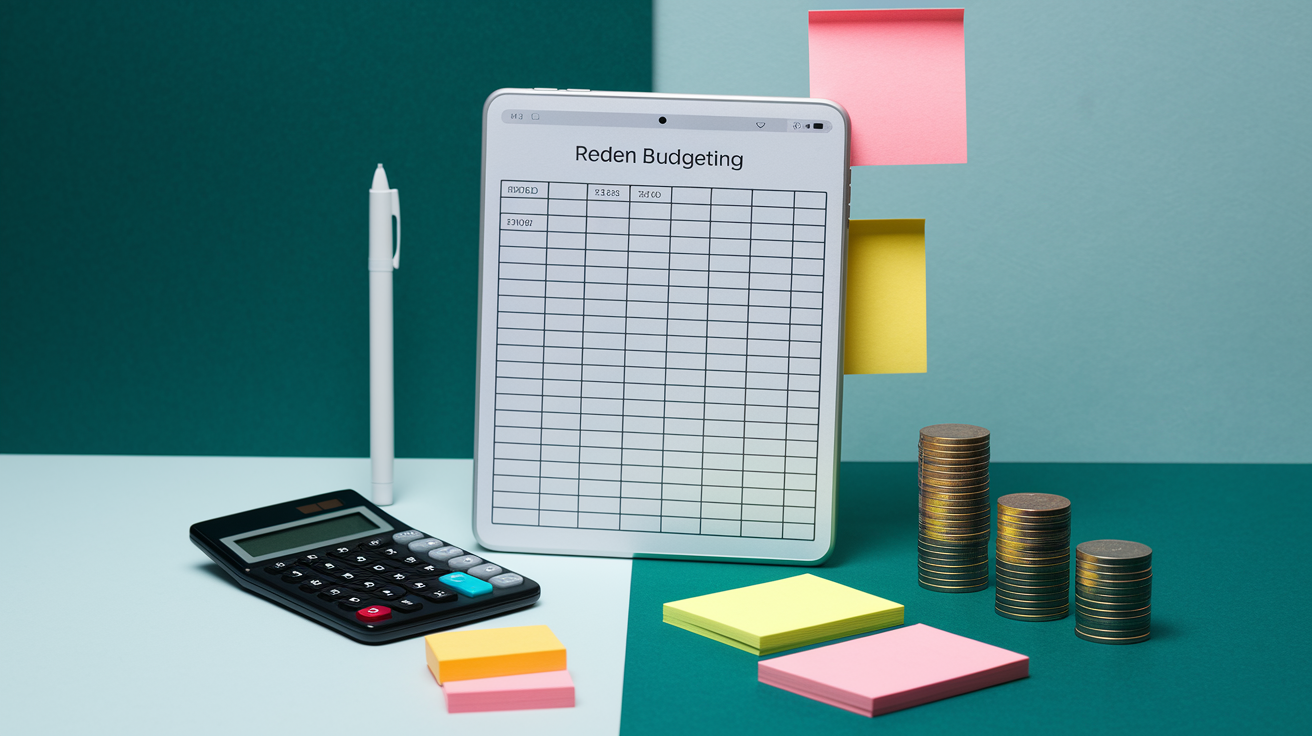
A simple worksheet keeps all your numbers organized and makes it easy to update your calculation when costs shift or income changes. Set up a spreadsheet or use a printable template with columns for category, monthly amount, annual amount, notes, and local cost-of-living multiplier if you want to compare different locations.
Your rows should include every essential expense category, your monthly debt payments, your emergency fund contribution, your contingency buffer, your required net income subtotal, your estimated effective tax rate, and your required gross income. This structure lets you see exactly where your money goes and how much income you need to cover it all.
| Category | Monthly Amount | Annual Amount | Notes | Local COL Multiplier |
|---|---|---|---|---|
| Housing (rent or mortgage) | $1,200 | $14,400 | Includes property tax | 1.0x |
| Utilities (electric, gas, water, internet, phone) | $180 | $2,160 | 3-month average | 1.0x |
| Food (groceries) | $450 | $5,400 | Household of 3 | 1.0x |
| Transportation (car payment, fuel, maintenance, transit) | $320 | $3,840 | Includes registration | 1.0x |
| Insurance (health, auto, renters) | $160 | $1,920 | Quarterly premiums ÷ 3 | 1.0x |
Add rows for healthcare, childcare, minimum debt payments, emergency fund contribution, contingency buffer. Sum all the monthly amounts to get your required net income, then divide by one minus your effective tax rate to get your required gross. Update this worksheet every six to twelve months or whenever a major expense shifts, like a rent increase, new loan, or job change.
Final Words
You now have the core formula and a step-by-step plan: total your essentials, add a monthly emergency fund contribution, include debt payments and a buffer, then convert required net to gross using your tax rate.
You learned to list essentials, track true monthly costs, adjust for regional prices and inflation, factor freelancer taxes, and use the example to run your numbers.
If you’re ready, plug your numbers into the worksheet to see how to calculate your minimum monthly income for financial stability. Start small and adjust as you go—this gets easier with practice.
FAQ
Q: How to calculate financial stability?
A: To calculate financial stability, add essentials, monthly emergency saving, debt payments, and a buffer: Required net = Essentials + Emergency contribution + Debt payments + Buffer. Convert to gross by dividing by (1 − tax rate).
Q: What is the 70/20/10 rule money?
A: The 70/20/10 rule means use 70% of income for living costs, 20% for savings or paying down debt, and 10% for extras or giving. It helps set simple spending and saving priorities.
Q: What is the 3 6 9 rule of money?
A: The 3 6 9 rule suggests a 3-month emergency for short-term needs, 6 months for most households, and 9 months for high-risk jobs or irregular income earners.
Q: Is $3000 a month a livable wage?
A: Whether $3,000 a month is livable depends on your essentials, taxes, family size, and location; run your essentials plus emergency contribution, debt, and buffer, then compare to $3,000 net.