

Think taking out a loan will always hurt your credit?
Think again.
A credit‑builder loan flips the script: the lender holds your money while you make monthly payments that get reported to the bureaus.
Those on‑time payments build the payment history that makes up 35 percent of your score.
If you pick a lender that reports to all three bureaus, automate payments, and finish the term, you can see steady improvement in months.
This post walks you through the exact steps to pick the right product, structure payments, and avoid common pitfalls so your score can rise.
Immediate Steps to Start Using a Credit‑Builder Loan Effectively

Credit‑builder loans flip the normal borrowing script. You don’t get cash upfront. When you borrow $500 or $1,000, the lender parks that money into a locked savings account or certificate you can’t touch. You make your monthly payments for 12 to 24 months, and once you’re done, the account unlocks. You get the principal back, sometimes with a little interest on top. The whole point? Building a track record of payments, not handing you emergency cash.
Your monthly payments get reported to Experian, Equifax, and TransUnion. That reporting is what matters. Payment history makes up 35 percent of your FICO score, so every on‑time payment strengthens that piece of your profile. Late or missed payments work against you the same way. Treat these payments like rent or your phone bill. Something you don’t skip.
Most people see small credit score bumps within one to six months if they pay on time every month. That early lift usually comes from the new account showing up on your report and your first few clean payments getting logged. By the end of the full term, around month 12 or 24, the benefit compounds. You’ve built an unbroken payment record and closed a loan successfully.
Here’s how to use a credit‑builder loan the right way:
-
Apply with a lender that reports to all three bureaus. Before you sign anything, confirm they report to Experian, Equifax, and TransUnion. If they only report to one bureau, half your future creditors won’t see your progress.
-
Read the loan agreement and confirm your payment schedule. Know your payment amount, due date, APR, and when you get the money back. Ask if they charge admin fees or interest upfront.
-
Set up autopay or recurring reminders. On‑time payments drive everything. Automating removes the risk of forgetting.
-
Hit every monthly payment by the due date. One late payment can undo months of work and stick a negative mark on your credit file.
-
Finish the term and collect the funds. When your final payment clears, the lender releases the savings account balance. Some give back any interest you paid. Others keep it as part of the loan cost.
Advanced Structure and Technical Mechanics of Credit‑Builder Loan Accounts
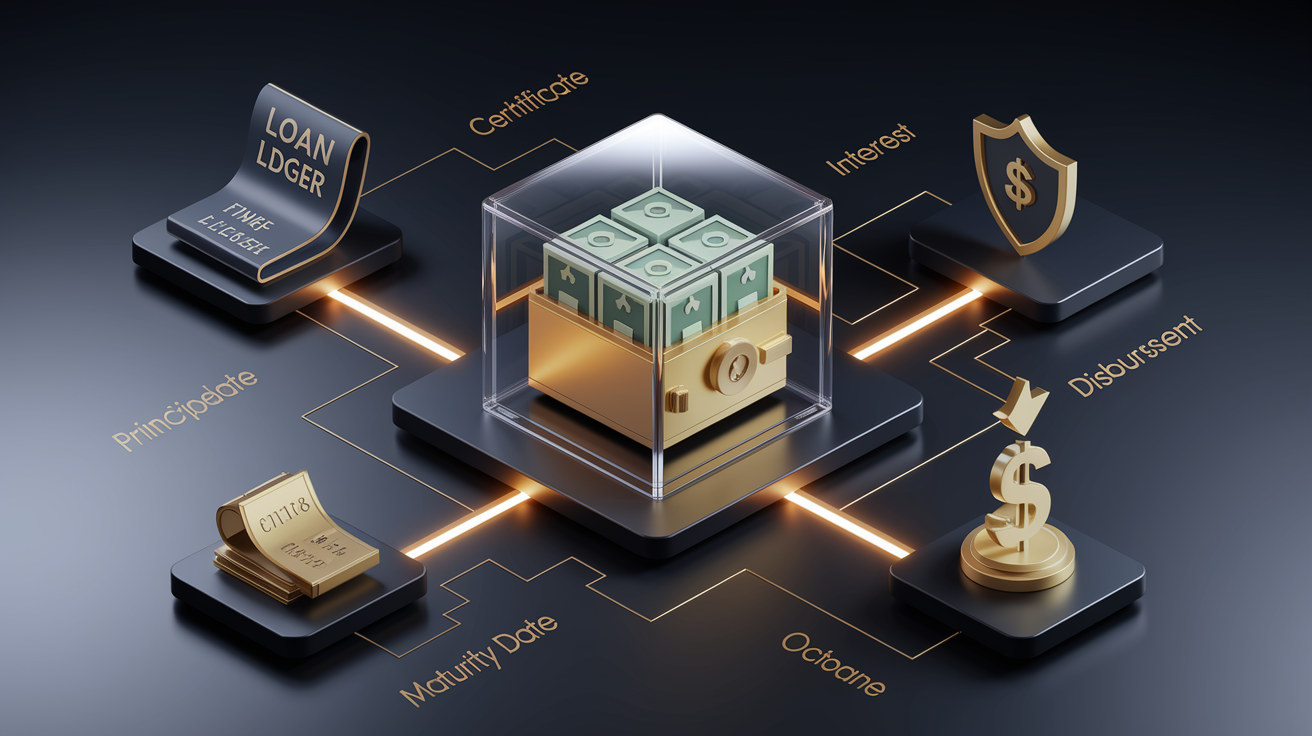
Lenders use savings‑secured installment structures to eliminate default risk and offer credit‑builder products to people with thin or damaged credit files. They hold your principal in a locked savings or certificate account for the life of the loan. That account is collateral. If you stop paying, they close it and recover what you owe. Because the lender faces almost zero loss risk, most credit‑builder programs don’t require a minimum credit score or hard credit check when you apply. The locked collateral is their safety net, which is why these loans work even for first‑time borrowers.
Your monthly payment usually covers principal and interest, with most of each payment chipping away at the loan balance. Some lenders credit the interest to your savings account, so the balance you get at the end might be a bit higher than the original principal. Others keep the interest as their fee. Disbursement happens the day your final payment clears. The lender unlocks the account, and the money transfers to your checking, a linked savings, or gets mailed as a check. The closed loan stays on your credit report as a positive installment account for years after payoff, still helping your credit mix and overall history.
| Feature | Description |
|---|---|
| Collateral type | Principal deposited into a locked savings or certificate account. Funds serve as security for the loan and can’t be withdrawn until final payment clears. |
| Disbursement process | Account unlocks on the maturity date. Lender transfers principal (and any accrued interest, if applicable) to borrower’s designated account or mails a check. |
| Interest handling | Some lenders credit earned interest to the savings balance. Others keep interest as part of loan cost. Always confirm in the agreement before signing. |
Choosing a Lender for a Credit‑Builder Loan
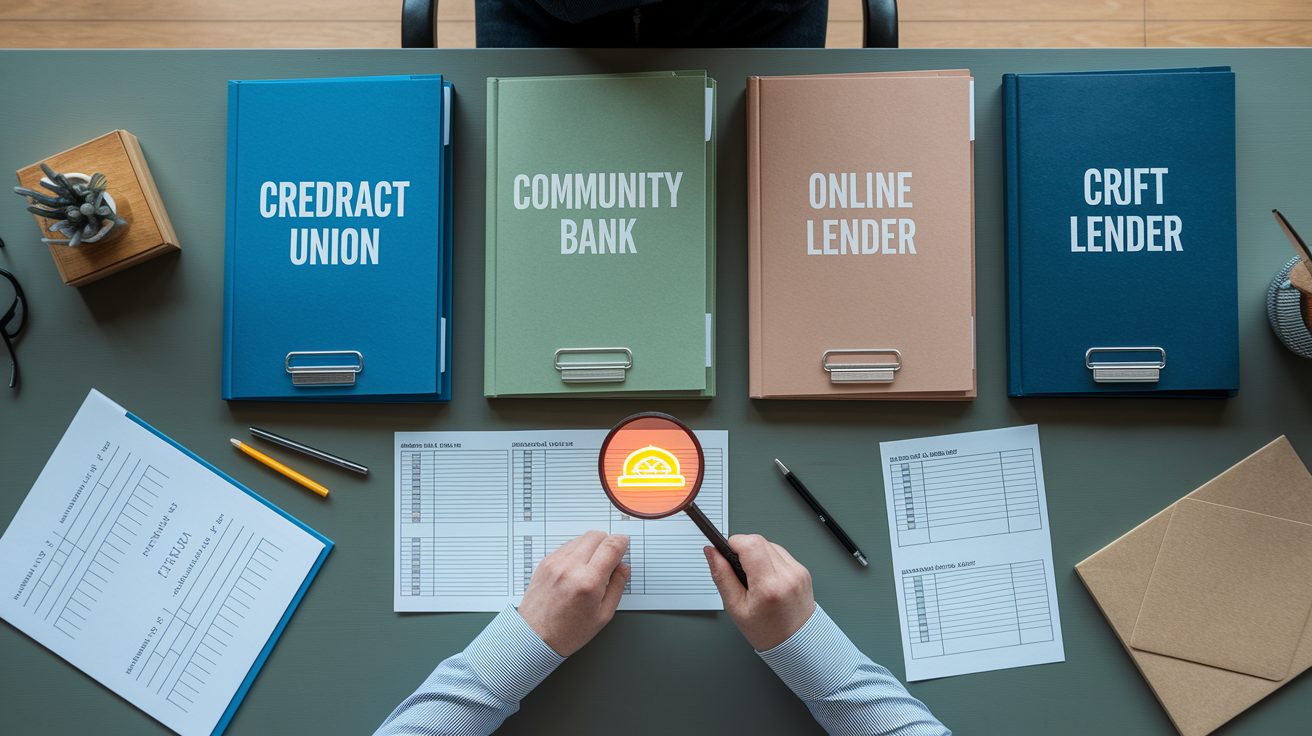
Credit unions, community banks, online fintechs, and community development financial institutions all offer credit‑builder loans. Credit unions often have the widest selection, but you might need to live, work, or worship in a specific county to qualify. Online lenders usually accept applications from any state they’re licensed in, but not every state is covered. Some lenders do soft credit pulls that don’t touch your score. Others run hard inquiries that might drop your score a few points temporarily.
Not every lender reports to all three bureaus. A lender that only reports to Experian leaves gaps in your Equifax and TransUnion files, and plenty of future creditors pull from just one bureau. If a lender can’t confirm tri‑bureau reporting, find someone else. You also need to compare APRs, any monthly or one‑time fees, available term lengths, and whether membership or deposit requirements apply.
Look for these four features when choosing a lender:
- Reports to Experian, Equifax, and TransUnion. Get it in writing or over the phone before you apply.
- Clear disclosure of APR and all fees. Watch for application fees, monthly admin charges, or membership costs that eat into your benefit.
- Flexible term lengths. Shorter terms like 12 months build credit faster than 24 or 36 months, but your monthly payments will be higher.
- No geographic or membership barriers you can’t meet. Some credit unions require a one‑time membership deposit or limit eligibility to certain counties or professions.
Eligibility Requirements and Application Checklist for First‑Time Borrowers
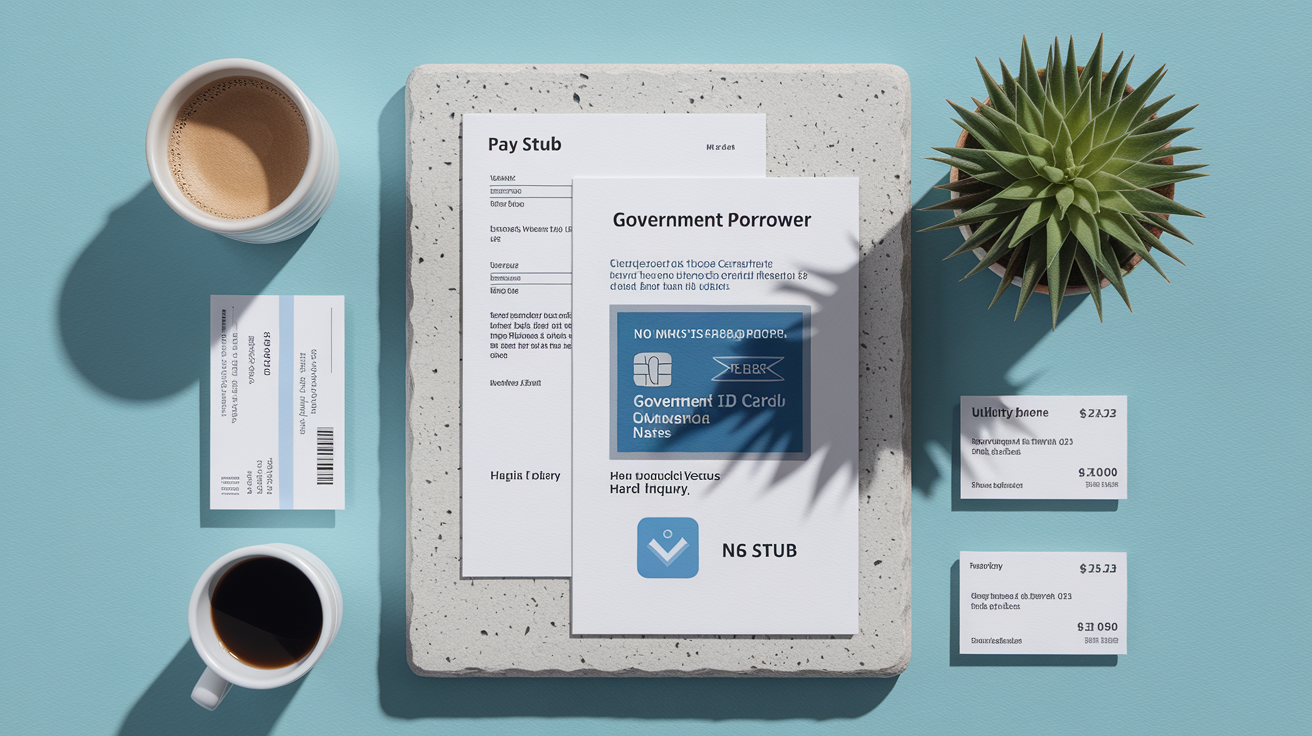
Most credit‑builder lenders don’t require an existing credit score. That makes these products accessible even if you’ve been denied credit cards or auto loans. Instead, the lender verifies your identity, confirms you have regular income, and checks that you hold an active checking or savings account. A few review your debt‑to‑income ratio to make sure you can handle the monthly payment on top of your current obligations, but that review is lighter than traditional loan underwriting.
Some lenders use a soft credit inquiry to check for recent bankruptcies or active collections without affecting your score. Others skip the credit check entirely and rely on income and bank‑account verification. If the lender does run a hard inquiry, expect a small, temporary score drop of three to five points. Hard inquiries stick around for two years but only affect scoring for the first twelve months.
Prepare these six items before you apply:
- Proof of income (recent pay stub, tax return, or bank statements showing direct deposits).
- Government‑issued photo ID (driver’s license, state ID, or passport).
- Active checking or savings account in your name.
- Current address (utility bill, lease agreement, or official mail dated within 90 days).
- Confirmation that the lender reports to all three bureaus (ask the lender directly or check the product disclosure).
- Awareness of whether the lender performs a hard or soft credit inquiry (soft inquiries don’t affect your score, hard inquiries might lower it slightly for several months).
Structuring Payments to Maximize Credit Score Improvement
Payment history is 35 percent of a FICO score and carries similar weight in VantageScore models. Every on‑time payment strengthens that part of your profile. Every late or missed payment weakens it. A single payment that’s 30 days late will get reported to the bureaus and can drop your score by 50 to 100 points, depending on the rest of your file. If you’re using a credit‑builder loan to repair damage from past late payments, adding a new one erases months of effort.
Bureaus get monthly updates from lenders, usually within a few days of your payment due date. If your due date is the 15th, the lender typically reports your account status to the bureaus before the end of that month. Every payment you make on the 15th (or earlier) shows up as on‑time in the next reporting cycle. The faster you establish a pattern of punctual payments, the faster the bureaus work that positive behavior into your scores.
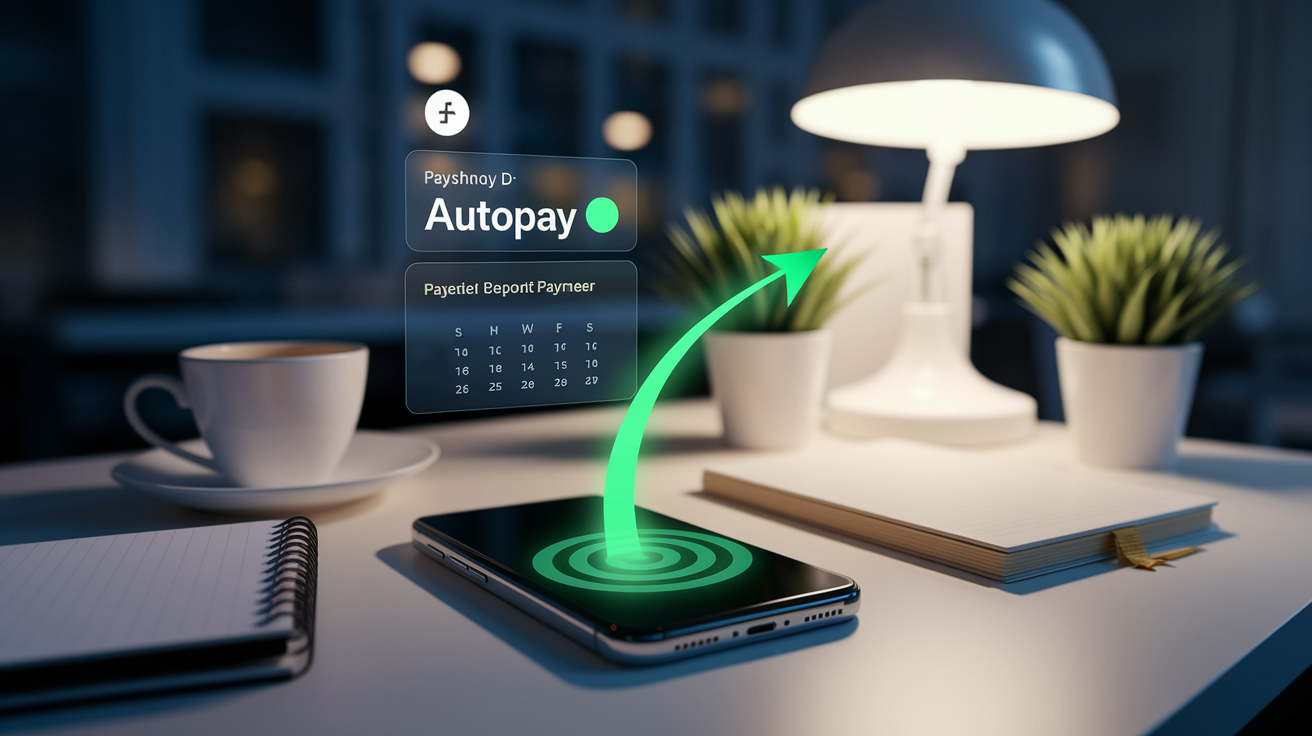
Autopay removes human error. If you enroll in automatic debit from your checking account, the payment posts on the due date every month without you lifting a finger. You still need to watch your checking balance to avoid overdrafts, but autopay makes sure you never miss a payment because you forgot or were traveling. Setting a calendar reminder three days before the due date gives you time to confirm your balance and transfer funds if necessary.
Use these four strategies to structure payments for maximum score benefit:
- Enroll in autopay the day you open the loan. Most lenders offer it free. Set it to deduct the full payment amount on or before the due date.
- Schedule the due date to line up with your paycheck. If you get paid on the 1st and 15th, pick a due date of the 5th or 20th so funds are always there when the payment posts.
- Pay early if you can. Payments that clear several days before the due date eliminate risk from bank processing delays or weekend closures.
- Check your checking account balance weekly. Even with autopay, overdrafts can cause payment failures and late marks. Keep a buffer of $100 above your regular balance to cover unexpected fees.
Loan Amounts, Terms, and Costs That Work Best for Credit Building

Lenders offer credit‑builder loans from $300 to $5,000, with most programs sitting between $500 and $1,500. You should choose the smallest amount you can comfortably repay, because the credit‑building benefit comes from the payment history, not the loan size. A $500 loan paid on time for 12 months builds just as much positive history as a $2,000 loan over the same period. Larger loan amounts mean higher monthly payments and more risk that you’ll miss a payment due to cash‑flow problems.
Terms between 12 and 24 months are most common. Shorter terms finish faster and free up your monthly budget sooner, but they come with higher monthly payments. A $1,000 loan at 10 percent APR over 12 months needs a monthly payment around $88, while the same loan stretched to 24 months drops the payment to about $46 but increases total interest paid. APRs on credit‑builder loans run from under 6 percent at some credit unions to nearly 30 percent at certain online lenders. High APRs shrink the net value of the funds you get at maturity, so go with lenders offering APRs below 15 percent when you can. Some programs also charge one‑time admin fees between $10 and $50, either deducted from the principal or added to your first payment.
| Cost Factor | Typical Range / Notes |
|---|---|
| Loan principal | $300 to $5,000. Most common range is $500 to $1,500. Choose the smallest amount you can afford to repay reliably. |
| APR | 5.99% to 29.99%. Credit unions and community banks often offer rates below 12%, while some online lenders charge above 20%. Lower APR means you keep more of the principal at maturity. |
| Loan term | 6 to 36 months. 12 to 24 months is most common. Shorter terms mean higher monthly payments but less total interest and faster credit building. |
| Administrative fees | $0 to $50 one‑time fee. Some lenders waive fees entirely. Ask whether the fee is deducted from principal or added to your first payment. |
Timeline: How Long It Takes to See Credit Score Improvement

Credit‑builder loan accounts usually show up on your credit report within 30 to 45 days after your first payment gets reported. Once the account appears, you might see a small score increase just from adding a new tradeline and establishing an installment account in your credit mix, which makes up 10 percent of a FICO score. That initial bump is often modest, between five and fifteen points, and depends on how thin your credit file was before the loan.
More meaningful improvements come over the following months. By month three or four, you’ve got three or four on‑time payments recorded, and your payment‑history percentage starts to strengthen. Most borrowers see measurable score gains of 20 to 40 points above their starting score between months three and six. By the time you finish a 12‑month term, your score may have climbed 35 to 60 points if you made every payment on time and avoided new late marks on other accounts. The closed loan stays on your report for up to ten years, continuing to contribute positively to your credit age and mix even after the account is paid off.
Credit‑builder loan improvement typically follows this pattern:
- Months one to two: Account appears on your credit report. Small score increase from new tradeline and installment‑account addition.
- Months three to six: Steady score growth as on‑time payment history stacks up. Improvements of 20 to 40 points are common during this window.
- Months seven to twelve (or term end): Further gains as payment record lengthens. Total improvement often hits 35 to 60 points by loan completion, depending on starting score and other credit behavior.
Alternatives to Credit‑Builder Loans and How They Compare

Credit‑builder loans aren’t the only way to establish or repair credit. Secured credit cards, becoming an authorized user on someone else’s account, and rent‑reporting services all help build payment history or credit mix. Each option has different costs, risks, and timelines, and some people use two or three methods at once to speed things up. Choosing the right tool depends on whether you need revolving credit (a card you can use for purchases) or installment credit (a closed loan), how much cash you can set aside, and whether you have a trusted friend or family member willing to add you as an authorized user.
Secured Credit Cards
A secured credit card needs an upfront cash deposit that becomes your credit limit. If you deposit $200, your limit is $200. You use the card for small purchases, pay the full statement balance every month, and the issuer reports your payment activity to the bureaus. Secured cards build revolving‑credit history, which is weighted heavily in credit scores, and many issuers graduate you to an unsecured card after six to twelve months of on‑time payments. The main drawback is that your deposit is tied up until you close the account or graduate, and some issuers charge annual fees between $25 and $50.
Authorized User
You can ask a parent, spouse, or close friend to add you as an authorized user on one of their credit cards. The account shows up on your credit report, including its age and payment history. If the primary cardholder has a long history of on‑time payments and low utilization, your score may jump within one or two billing cycles. The risk? Any late payments or high balances by the primary user also land on your report and can hurt your score. Always confirm that the card issuer reports authorized users to all three bureaus before you agree.
Rent‑Reporting Services
Services offered by some fintech platforms let you report your monthly rent payments to one or more credit bureaus. Rent isn’t automatically reported by most landlords, so these services fill that gap. Reporting rent can add 12 months of payment history to your file quickly if you provide past bank statements, but not all credit‑scoring models include rent data, and the impact is often smaller than installment or revolving accounts. Rent‑reporting services typically charge a monthly or annual fee.
| Method | Upfront Cost | Credit Type | Typical Timeline |
|---|---|---|---|
| Credit‑builder loan | $0 to $50 (fees); principal locked until payoff | Installment | 3 to 12 months for measurable improvement |
| Secured credit card | Deposit equals credit limit (e.g., $200 = $200 limit); possible annual fee | Revolving | 1 to 6 months; many issuers graduate account after 6 to 12 months |
| Authorized user | $0 (depends on primary cardholder’s willingness) | Revolving (borrowed tradeline) | 1 to 2 billing cycles; benefit depends entirely on primary user’s behavior |
| Rent reporting | Monthly or annual service fee ($10 to $20 per month) | Alternative data (not installment or revolving) | Immediate history addition if past payments are reported; smaller scoring impact than traditional accounts |
Common Mistakes to Avoid When Using a Credit‑Builder Loan

The biggest mistake? Missing a payment. Even one payment that’s 30 days late gets reported to all three bureaus and can drop your score by 50 to 100 points. Late payments stick around for seven years, though their impact fades over time. If cash flow gets tight, contact your lender immediately. Some offer hardship deferrals or let you adjust your due date once per year.
Another common error is picking a lender that reports to only one or two bureaus. Many future creditors pull reports from Equifax or TransUnion but not Experian, or the other way around. If your credit‑builder loan only shows up on one bureau’s file, two out of three lenders will never see it. Always confirm tri‑bureau reporting in writing before you sign the loan agreement.
Avoid these five mistakes:
- Skipping confirmation of tri‑bureau reporting. Verify the lender reports to Experian, Equifax, and TransUnion before you apply.
- Borrowing more than you can afford. High monthly payments raise the risk of missed payments. Choose a loan amount that leaves room in your budget for unexpected expenses.
- Ignoring fees and APR. Admin fees and high interest rates shrink the net amount you get at maturity. Compare total cost across lenders.
- Failing to set up autopay or reminders. Manual payments rely on memory, and memory fails. Automate the payment or set recurring phone reminders three days before the due date.
- Assuming you can access the funds early. The principal is locked until the final payment clears. If you need emergency cash during the loan term, you can’t touch the savings account balance.
Monitoring Progress and Using Credit Reports to Track Improvement
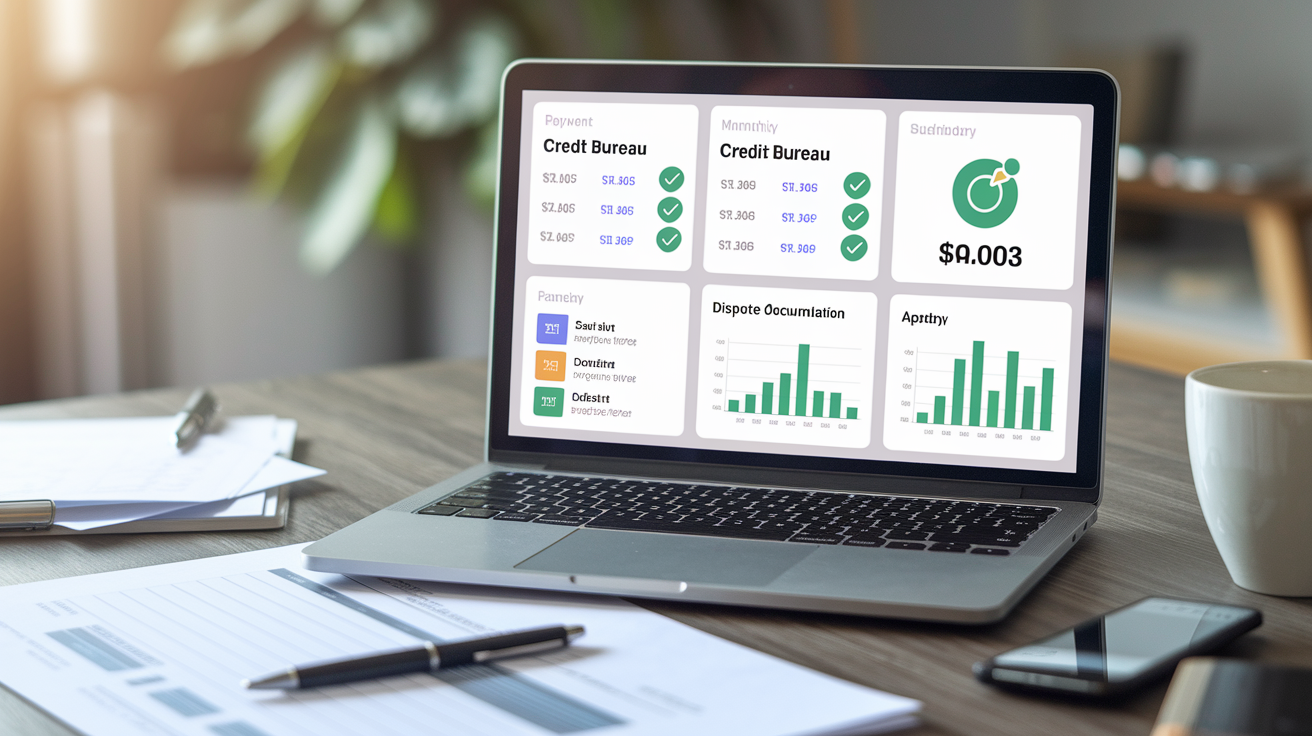
Credit‑builder loans show up on your credit report as closed‑end installment accounts. The account listing shows the original loan amount, current balance, monthly payment, and payment history. Each month, the lender updates the balance and adds a mark showing whether your payment was on time, late, or missed. You need to check your reports regularly to confirm the lender is reporting accurately and that your payments are being recorded.
You’re entitled to one free credit report every twelve months from each of the three major bureaus through the federally authorized site. Some credit‑card issuers and personal‑finance apps also give you free monthly credit scores and report summaries, though these may pull from only one bureau. Paid monitoring services offer daily updates and alerts for new accounts or inquiries, but free tools work fine for most borrowers. If you find an error, like a payment marked late when you paid on time, file a dispute directly with the bureau online or by mail. The bureau has to investigate within 30 days and fix the error if your documentation proves the mistake.
Follow these three steps to track your credit‑builder loan progress:
- Pull your full credit report from all three bureaus 60 days after your first payment. Confirm the account appears on Experian, Equifax, and TransUnion and that your payment history is accurate.
- Check your credit score monthly using a free app or your credit‑card issuer’s dashboard. Watch for upward movement as your on‑time payment record grows.
- Dispute any errors immediately. If a payment is marked late but you have proof of on‑time payment (bank statement or confirmation email), file a dispute online with the bureau showing the error. Keep copies of all documentation.
Realistic Case Samples Showing Credit‑Builder Loan Results
A borrower with no prior credit history applied for a $1,000 credit‑builder loan at 8 percent APR with a 12‑month term and monthly payments of $87. The lender reported to all three bureaus. The borrower enrolled in autopay and made the first payment on time. By month three, the borrower’s credit report showed three on‑time payments and a new installment account. The borrower’s FICO score, which started at zero (no score), became scorable at around 640 by month three. That early score let the borrower apply for a secured credit card and qualify for a cell‑phone plan without a large deposit.
A second borrower had a FICO score of 580 after recovering from two collections that had been paid and removed. That borrower opened a $500 credit‑builder loan at 12 percent APR over 12 months, with a $44 monthly payment. By month six, the borrower had six straight on‑time payments recorded, and the score had climbed to 625. At month twelve, when the loan was paid in full, the borrower’s score reached 635, a 55‑point improvement from the starting point. The closed loan kept appearing on the borrower’s report, supporting future credit applications for an auto loan and an unsecured credit card.
Final Words
Start making on-time payments, set up autopay, and confirm the lender reports to all three bureaus.
Pick a lender with clear fees and terms you can afford, and know funds stay locked until the final payment.
Follow the five steps and check your credit reports. This shows how to use a credit-builder loan to improve credit, and with steady on-time payments you should see noticeable gains in months, not years.
FAQ
Q: How much will a credit builder loan raise my credit score?
A: A credit-builder loan may raise your credit score by a modest, variable amount depending on starting credit, payment history, and reporting. You may see changes in 1–6 months, with bigger gains by month 12.
Q: How to increase credit score by 100 points in 30 days? / How do I add 50 points to my credit score?
A: Adding 50–100 points in 30 days is unlikely for most people. Quick improvements come from fixing report errors, paying down high balances, or getting new on-time payments reported. Results vary by profile.
Q: How to use a credit builder loan effectively?
A: To use a credit-builder loan effectively, confirm the lender reports to all bureaus, pick an affordable term, set up autopay, make every on-time payment, and access held funds after maturity.